

Excavation Safety Training in India — Protect Your Workers, Stay Compliant
The Ground Gives No Warning. Training Does.
A trench collapse kills in under a second. One cubic metre of soil weighs as much as a small car — and when it moves, it moves without warning. NIST Global's Excavation Safety Training gives your teams the technical knowledge to classify soil, select the right protective system, conduct daily inspections, identify underground services, and respond to a collapse emergency — before the ground decides for them.
Excavation safety built for your site conditions and soil types
The Reality
Why Excavation Collapses Keep Killing Construction Workers
Excavation fatalities are not accidents of bad luck. They are the predictable outcome of visible hazards, soil types, trench depths, water ingress, surcharge loads that were not assessed, and protective systems that were not installed.
Collapse happens without warning — in under a second
Unlike falling from height or being struck by an object, excavation collapse provides no warning signs visible to the untrained eye. Cracks may appear in the ground seconds before collapse. Workers who don't know what to look for have no chance of escape.
Soil type determines risk — and it changes
The same trench that was stable yesterday may be unstable today after rainfall, vibration from nearby plant, or ground disturbance. Workers who don't understand soil classification cannot recognise when conditions have changed the collapse risk of an excavation they've been entering safely for days.
Buried services — struck without warning
Excavation through unidentified underground electrical cables, gas mains, or water services kills workers and causes major incidents. Cable and pipe locator equipment is available on most sites — but workers who haven't been trained in its use, limitations, and interpretation cannot use it effectively.
BOCW Rules 1998 — inspection obligations not met
BOCW Rules 1998 require daily excavation inspection by a competent person before workers enter, after any rainfall or ground disturbance, and after any event that could affect stability. These inspections are routinely skipped — creating regulatory exposure and, more critically, leaving preventable collapses undetected.
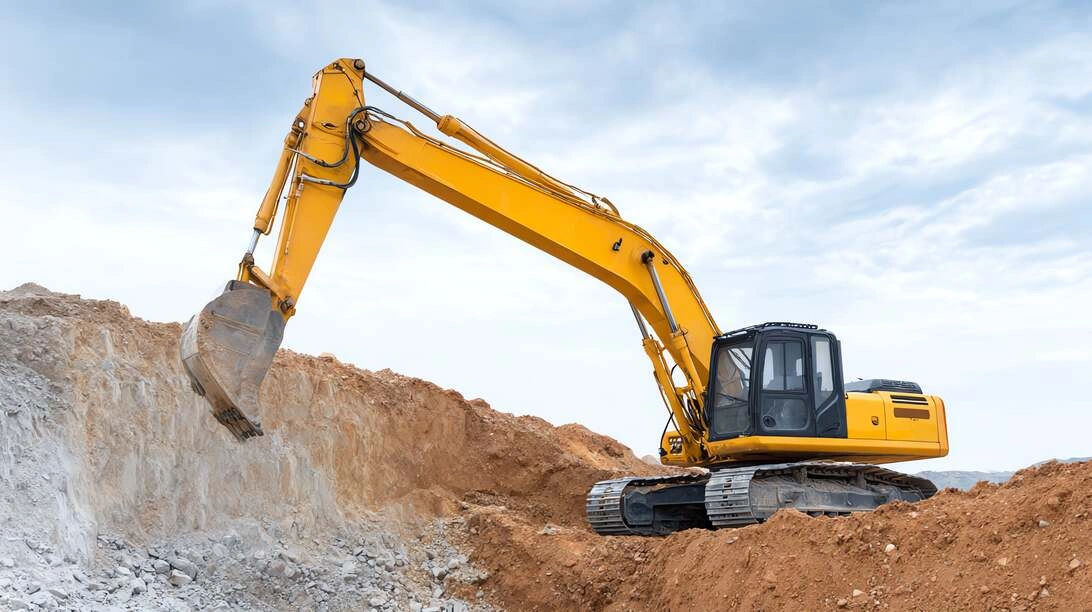
From Open Trench Risk to Controlled, Inspected, Safe Excavation
NIST Global's Excavation Safety Training is a comprehensive, technically rigorous programme that equips construction workers, supervisors, civil engineers, and HSE personnel with the knowledge and practical skills to eliminate the leading causes of excavation and trenching fatalities on Indian construction sites.
The programme is built around three core competencies: Pre-excavation risk identification — soil classification, underground service detection, site survey, and permit-to-work; Protective system selection and application — sloping, benching, shoring, and shielding matched to the soil type, depth, and site conditions; and Daily inspection and emergency response — recognising deteriorating ground conditions before entering, and responding correctly if collapse occurs.
Every NIST Global excavation safety programme is customised to the specific soil conditions, project type, site layout, and equipment available at the client's site — ensuring participants apply what they learn to the actual conditions they encounter, not a textbook scenario that doesn't match Indian ground conditions.
Aligned with BOCW Act 1996, BOCW Rules 1998, IS 4081 (Safety in Construction), OSHA 29 CFR 1926 Subpart P (reference standard), and ISO 45001 emergency preparedness requirements.
Get a Site-Specific Excavation Safety Programme →Know Your Soil Type — It Determines Every Protective Decision
Soil classification is the technical foundation of all excavation safety decisions — the type and depth of protective system, the safe slope angle, and the inspection frequency all depend on correctly identifying the soil you're cutting into. NIST Global's training covers all three OSHA/BOCW soil types with Indian site-specific examples and field classification methods.
Type A soils are cohesive, stable soils with an unconfined compressive strength of at least 144 kPa. They include stiff clays, hardpan, and cemented soils that have not been previously disturbed. Type A is the most favourable soil classification for excavation safety — it can be sloped at a steeper angle and allows for greater trench depth before shoring is required. However, Type A classification is lost if: the soil has been previously disturbed by excavation or construction activity; it is subject to water seepage or vibration; cracks are present in the excavation faces; or the soil has been classified as Type A but shows signs of instability. Workers must understand that Type A classification requires ongoing verification — not a one-time assessment at the start of the job.
- UCS ≥ 144 kPa (approximately 1.5 kg/cm²)
- Maximum slope without shoring: 3H:4V (53° from horizontal)
- Examples: stiff clay, caliche, hardpan, cemented soils
- Loses Type A status if previously disturbed
- Loses Type A status if water seepage or cracking is present
- Loses Type A status if subject to vibration from nearby plant
- Field test: manual penetration resistance (thumb penetration <25 mm)
- Shoring still recommended for depths approaching 4 metres
- Daily inspection still mandatory before entry
Type B soils have moderate cohesive strength with an unconfined compressive strength between 48 and 144 kPa. This category includes medium-stiff clays, angular gravel, previously disturbed Type A soils, and soils subject to vibration. Type B is the most common soil classification encountered on Indian construction sites — the red laterite soils, weathered rock, and alluvial clays present across much of peninsular India often classify as Type B. The required slope is shallower than Type A, requiring either a wider excavation footprint or engineered shoring for narrow trenches. Workers must understand that Type B soil can behave unpredictably — particularly in wet conditions or when excavating adjacent to existing foundations.
- UCS 48–144 kPa
- Maximum slope without shoring: 1H:1V (45° from horizontal)
- Examples: medium clay, angular gravel, disturbed Type A, laterite
- Includes any soil subject to water seepage or vibration
- Includes previously excavated and backfilled soil
- Field test: thumb penetration 25–75 mm
- Shoring strongly recommended for depths above 2 metres
- Enhanced daily inspection — more frequent monitoring in wet weather
- Cracking in trench face = immediate evacuation and reclassify as Type C
Type C soils are the least stable and require the most extensive protective systems. They include granular soils (sand, gravel, loam), running soils (soils that cannot maintain a slope and flow when disturbed), submerged or water-seeping soils, and any soil in a trench where water is accumulating. Type C soils require either a very shallow slope (1.5H:1V — extremely wide excavation) or full structural shoring. In many Indian coastal, riverine, and urban areas where alluvial soils, filled ground, and waterlogged conditions are common, Type C classification is effectively the default — and workers who enter Type C trenches without full shoring are at immediate life-threatening risk. Any soil showing running, flowing, or seeping water must be treated as Type C regardless of its dry-state classification.
- UCS < 48 kPa (very low cohesive strength)
- Maximum slope without full shoring: 1.5H:1V (34°)
- Examples: sand, gravel, loam, fill material, waterlogged soils
- Any soil with running water must be classified as Type C
- Any soil showing seepage, cracking, or fissuring = Type C
- Full structural shoring mandatory for any depth >1.2 m
- Field test: thumb fully penetrates with little resistance
- Dewatering required if groundwater level is within trench zone
- Short-interval inspections — conditions can change rapidly
The Four Protective Systems for Excavation Safety
Selecting the right protective system depends on soil classification, trench depth, site constraints, groundwater conditions, and proximity to existing structures. NIST Global's training covers all four systems with selection criteria and implementation requirements.
Sloping involves cutting back the excavation walls at a stable angle determined by the soil classification — eliminating the vertical face that creates collapse risk. The required angle is determined by soil type: Type A allows 53° (3:4 H:V ratio), Type B requires 45° (1:1 H:V), and Type C requires 34° (1.5:1 H:V). Sloping requires no structural materials but consumes significant horizontal space. It is the preferred option for wide open excavations, shallow trenches, and where ground conditions are well-understood and consistently stable. Sloping angles must be reassessed whenever soil conditions change — particularly after rainfall, dewatering, or vibration from nearby plant operations.
- Slope angle must match soil type: Type A 53°, Type B 45°, Type C 34°
- Spoil heap must be at least 1 metre from the top of the slope
- No surcharge loads (plant, materials) within the exclusion zone
- Slope angle must be reassessed after rainfall or ground disturbance
- Not suitable for narrow trenches, urban sites, or congested areas
- Inspect slope face daily and after any weather or disturbance event
- Combination with benching is permitted for suitable cohesive soils
- Document the basis for slope angle selection in site safety records
Benching involves cutting horizontal steps into the trench wall, creating a series of terraced levels rather than a continuous slope. Simple benching consists of a single horizontal cut creating one step at the base of a vertical upper wall; multiple benching uses several steps for deeper excavations. Benching is only permitted in stable cohesive soils (Type A and B) — it is strictly prohibited in Type C soils, which cannot maintain the vertical faces between bench levels. The maximum vertical face height and horizontal bench width are specified in OSHA and BOCW guidance. Like sloping, benching provides no protection against water seepage, vibration-induced instability, or rapid soil condition changes — and must be reassessed whenever ground conditions change.
- ONLY permitted in Type A and Type B cohesive soils — NOT Type C
- Simple bench: maximum 1.2m vertical face at base, minimum 1.2m horizontal width
- Multiple benching: each vertical face maximum 1.2m; horizontal width = vertical height
- Overall bench geometry must still result in 53° or 45° equivalent slope
- Prohibited in any soil showing water seepage, cracking, or fissuring
- Access and egress ladder must extend above each bench level
- Inspect after every significant rainfall event before re-entry
- Document bench dimensions and soil classification in inspection records
Shoring involves installing structural supports against the trench walls to actively resist soil pressure and prevent movement. Three main shoring systems are used in Indian construction: timber shoring (traditional cross-braced or close sheeted systems using timber struts and planks), hydraulic shoring (aluminium or steel vertical shores using hydraulic cylinders to maintain constant pressure against trench walls — quick to install and remove), and sheet piling (interlocking steel sections driven into the ground before excavation — provides continuous, watertight support for deep or waterlogged excavations). Shoring must be installed from the top down as excavation proceeds and removed from the bottom up. It must be designed or selected by a competent person based on the soil load calculations for the specific trench dimensions.
- Install from the top down as excavation deepens — never excavate then shore
- Remove from the bottom up — maintain support until workers are clear
- System must be selected or designed for the soil load and trench geometry
- Hydraulic shores — check cylinder pressure before each shift entry
- Timber shoring — inspect for cracking, splitting, or displacement daily
- Sheet piling — inspect for watertightness and movement at each inspection
- Never modify or remove struts without competent person authorisation
- Inspect entire system before entry and after any disturbance or rainfall
A trench box (also called a trench shield or Tormentor) is a pre-fabricated steel or aluminium protective structure placed inside the excavation to create a protected working zone around workers. Unlike shoring, a trench box does not prevent soil from collapsing — it creates a structural enclosure that the soil collapses against, protecting the workers inside. Trench boxes are moved along the trench as work progresses, making them highly efficient for long continuous trenches such as pipeline and utility installation. Workers must understand that they must work within the trench box at all times — the protected zone extends only to the inner face of the box, and ground outside the box remains unsupported. The box must be rated for the soil load at the specified trench depth.
- Box must be rated for the soil load at the working depth — check manufacturer data
- Workers must remain inside the protected zone — NOT beyond the box end faces
- Box must extend at least 45 cm above the trench top in loose soils
- Excavate only to the bottom of the box — do not over-excavate below the box base
- Inspect box for damage before deployment — dents, cracks, bent struts
- Spoil heap must remain at least 1 metre from trench edge during box movement
- Never attempt to work at the open ends of the trench box
- Retrieval plan must be in place before box is lowered into trench
What a Competent Person Checks Before Anyone Enters the Trench
BOCW Rules 1998 require daily excavation inspection by a competent person before workers enter, after any rainfall, and after any event that could affect stability. These are the mandatory check points — and the sequence matters.
Ground Conditions & Trench Walls
Check for cracking, bulging, seepage, or discolouration of trench walls. Any change in the wall face since the previous inspection is a warning sign requiring immediate assessment before entry.
Protective System Integrity
Verify all shoring members are in position, hydraulic shores maintain pressure, trench box has not shifted, or slopes remain within the required angle. Any movement or damage requires competent person assessment before entry.
Spoil Heap & Surcharge Loads
Confirm all excavated material remains at least 1 metre from the trench edge. Check that no plant, materials, or equipment have been positioned within the exclusion zone since the previous inspection.
Water Ingress & Drainage
Check the trench base for water accumulation since the last inspection — particularly after rainfall, irrigation in adjacent areas, or dewatering pump failure. Water in the trench significantly increases Type C risk even in previously stable soils.
Atmospheric Testing (Deep Excavations)
For excavations exceeding 1.2–1.5 metres, conduct multi-gas atmospheric monitoring before entry: oxygen level ≥ 19.5%, LEL < 10%, H₂S < 1 ppm TLV-C, CO < 25 ppm. Record readings and time on inspection sheet.
Safe Access & Egress
Verify ladders are correctly positioned — one ladder per 7.5m of trench, secured at top, extending at least 1 metre above trench edge. Check ladder rungs are undamaged and free from mud or debris that could cause slipping.
Edge Protection & Barriers
Check that barriers, warning signs, and lighting (for evening or night work) are in position around the excavation perimeter. Verify that no barriers have been removed to allow plant access without being replaced.
Record & Sign-Off
Document all findings on the daily excavation inspection form — including any deficiencies identified and actions taken or required. Sign and date the inspection record. Do not permit entry until all deficiencies are resolved.
A Complete Excavation Safety Curriculum — Built for Indian Sites & Soil Conditions
Every topic is taught through instructor-led sessions, case study analysis of real Indian excavation incidents, and practical hazard identification exercises using site-relevant scenarios.
Excavation Hazard Identification
Systematic identification of excavation hazards by category — collapse and cave-in, falls into open excavations, falling objects, underground service strikes, atmospheric hazards, equipment proximity, and water ingress. Risk assessment for excavation activities using BOCW-compliant HIRA methodology.
Soil Classification & Field Testing
OSHA/BOCW soil classification system (Type A, B, C), field testing methods (manual penetration testing, visual assessment, crack observation), factors that downgrade soil classification, and the dynamic nature of soil stability — why yesterday's Type A may be today's Type C after rainfall or vibration.
Pre-Excavation Planning & Utility Detection
Site survey requirements, as-built drawing review, utility authority record requests, CAT and Genny cable and pipe locator operation and limitations, trial holing requirements within the CAT scan search zone, and permit-to-work for excavation near identified services.
Protective System Selection & Application
Selection criteria for sloping, benching, shoring (timber, hydraulic, sheet piling), and shielding (trench box) — based on soil classification, trench depth, width, groundwater conditions, and adjacent structure proximity. Installation sequence, inspection during use, and safe removal procedures.
Groundwater, Dewatering & Water Ingress
The effect of water on soil stability — how waterlogged soils lose cohesive strength rapidly. Dewatering methods (sump pumping, wellpoint dewatering), maintaining dewatering during occupied shifts, and recognition of groundwater seepage in trench walls as an immediate stop-work trigger.
Atmospheric Hazards in Deep Excavations
Oxygen deficiency, carbon dioxide, carbon monoxide, hydrogen sulphide, and flammable gas accumulation in excavations. Multi-gas detector selection, calibration awareness, correct use and interpretation, and the mandatory atmospheric testing sequence before entry into any deep excavation.
Daily Inspection Procedures & Documentation
BOCW Rules 1998 inspection requirements, competent person obligations, what to check and in what order, inspection record completion, stop-work trigger conditions, and the legal consequences of failing to inspect or failing to act on inspection findings.
Plant, Vehicle & Surcharge Load Management
Exclusion zones for plant operating near excavation edges, surcharge load effect on trench wall stability (spoil heap positioning, vibration from compaction equipment, loaded trucks), crossing provisions over trenches, and coordinating plant operations with occupied excavation work.
Emergency Response to Trench Collapse
Immediate response to a collapse — do not enter without respiratory protection and structural support; activate emergency services; provide accurate location and casualty information; manage secondary collapse risk during rescue. CPR for crush and asphyxiation casualties. Rescue from buried positions — equipment and technique awareness.
What Workers & Supervisors Will Be Able to Do After Training
Observable, measurable competencies — applicable on the next excavation job.
Classify Soil Type in the Field
Apply the Type A/B/C classification system using field assessment methods — visual inspection, manual penetration testing, crack and fissure observation, and groundwater presence — determining the appropriate protective system before excavation begins.
Identify Underground Services Before Excavating
Follow the correct pre-excavation utility detection sequence — drawing review, utility record requests, CAT/Genny locator use — and understand the limitations of each method, the requirement for trial holing in the confirmed search zone, and what to do when a service is found.
Select & Apply the Correct Protective System
Match the protective system (sloping, benching, shoring, or shielding) to the soil type, trench depth, site constraints, and groundwater conditions — and understand the specific installation requirements, limitations, and inspection obligations of each system.
Conduct & Document Pre-Entry Inspections
Complete the mandatory daily pre-entry inspection in the correct sequence — ground conditions, protective system integrity, spoil heap, water ingress, atmospheric testing, and access — and document findings on the BOCW-compliant inspection record with correct sign-off.
Monitor & Interpret Atmospheric Conditions
Operate a multi-gas detector before entering deep excavations, interpret oxygen, LEL, CO, and H₂S readings correctly, identify conditions requiring immediate evacuation, and understand the specific atmospheric risk profiles of different excavation environments (near sewers, landfill, gas mains).
Respond Correctly to a Trench Collapse
Apply the correct initial response to a trench collapse — do not enter the unstable excavation; activate emergency services with precise location; manage the scene to prevent secondary collapse; and administer CPR and first aid to recovered casualties pending paramedic arrival.
Benefits for Every Level of Your Organisation
From the excavation worker entering the trench to the civil engineer specifying the protective system — excavation safety training delivers measurable value at every level.
BOCW Act Compliance Documentation
Auditable training records and competent person inspection documentation demonstrating compliance with BOCW Rules 1998 excavation safety obligations — protecting the organisation during site inspections, regulatory enforcement visits, and post-incident investigations.
Competent Person Capability On-Site
Training creates the competent persons needed to conduct and sign off daily pre-entry inspections — the BOCW-mandated first line of defence against collapse incidents on every occupied excavation, every shift, every day.
Reduced Legal & Regulatory Exposure
Excavation fatalities trigger prosecution under BOCW Act, IPC Section 304A, and civil liability claims. Documented, site-specific, competency-assessed training is the primary defence in any investigation into whether the employer discharged their duty of care.
Ability to Recognise Collapse Warning Signs
Trained workers know what a deteriorating trench wall looks like — cracks, seepage, bulging, and discolouration — and have both the knowledge and the organisational authority to stop work and exit before collapse occurs.
Right to Refuse Unsafe Excavation Entry
Understanding the BOCW Act inspection requirements and the specific conditions that make an excavation unsafe gives workers the knowledge-based confidence to refuse entry into an uninspected or inadequately protected trench.
Career Progression to Competent Person
Certified excavation safety competency is the pathway to the competent person designation required by BOCW Rules 1998 — a valued qualification for supervisors, site engineers, and HSE professionals in construction, civil, and infrastructure sectors.
Dramatically Reduced Fatality & Project Risk
A single trench collapse fatality generates costs — legal, regulatory, insurance, reputational, project delay, and human — that make any training investment look trivial. Prevention through technical competency is not optional in excavation-intensive construction.
Client & Prequalification Confidence
Major infrastructure clients, government contractors, and international developers require documented excavation safety training as part of contractor prequalification — particularly on projects involving deep foundations, underground utilities, and water infrastructure.
Zero-Incident Excavation Programme
Excavation safety training builds the systematic approach — soil assessment, protective system selection, daily inspection, atmospheric monitoring — that converts an inherently high-risk activity into a controlled, documented, and manageable one.
How NIST Global Delivers Excavation Safety Training
Excavation safety cannot be understood without seeing real soil, real trench walls, and real protective systems. Every session uses site photographs, Indian case studies, and practical exercises to bring the theory to life in your specific soil and site context.
NIST Global by the Numbers
Trusted Across India's Most Demanding Industries
18+ years of exclusive HSE focus delivering measurable outcomes across 500+ organisations and 35+ industry sectors.
Excavation Safety Training Is Essential For
BOCW Rules 1998 require competent person inspection before every occupied excavation entry. This training is the pathway to that designation — and the protection for every worker who enters a trench.
Excavation Workers & Labourers
Workers who enter trenches and excavations daily — who need to understand soil collapse risk, recognition of warning signs, atmospheric hazards, and their right to refuse entry into an unsafe excavation.
Site Supervisors & Foremen
Supervisors responsible for daily pre-entry inspections, protective system maintenance, and stop-work decisions — requiring the competent person technical knowledge mandated by BOCW Rules 1998.
Civil & Structural Engineers
Engineers specifying protective systems, reviewing method statements, and responsible for excavation design on foundation, utility, and infrastructure projects — requiring technical depth in soil classification and protective system selection.
HSE Officers & Safety Personnel
Safety professionals auditing excavation work, reviewing inspection records, and responsible for BOCW Act compliance — who need technical excavation safety competency to assess the adequacy of controls on complex sites.
Utility & Pipeline Installation Teams
Teams undertaking trenching for water, gas, electrical, and telecommunications infrastructure — for whom excavation is the primary daily work activity and where competency in all four protective systems is essential.
Plant Operators & Drivers
Excavator operators and dump truck drivers working near open excavations — who need to understand exclusion zones, surcharge load restrictions, and their responsibilities for keeping pedestrian workers clear of the collapse zone.
Excavation Safety Training for Every Ground-Work Sector
Soil conditions, excavation depths, and proximity hazards vary enormously by sector. NIST Global customises case studies, soil type examples, and protective system selection to match your specific ground conditions and project type.
Building & Civil Construction
Roads & Infrastructure
Water & Sewerage
Power & Utilities
Industrial Construction
Mining & Quarrying
Pair Excavation Safety with NIST Global's Construction Safety Suite
Excavation Safety Training is most effective as part of a complete construction safety programme. Pair it with Construction Safety Training, First Aid, and Confined Space Entry training for full site safety coverage.
Real Experiences from Organisations We've Trained
Trusted by civil engineers, project managers, and safety professionals across India's construction and infrastructure sectors.
Frequently Asked Questions About Excavation Safety Training
Clear, complete answers to the questions civil engineers, site supervisors, and HSE professionals ask most about excavation safety and NIST Global's training programme.
Expert Insights on Excavation Safety & Trench Collapse Prevention
Practical guidance from NIST Global's HSE experts — helping civil engineers, site supervisors, and HSE professionals build safer excavation practices across India.
Importance of Construction Safety Management
Why systematic safety management — including excavation planning and inspection — is the foundation of incident-free construction delivery, and the cost of failing to implement it.
Read article →Construction Site Safety Rules & Regulations in India
The key Indian regulations governing excavation safety — BOCW Act, BOCW Rules 1998, and IS 4081 — and the specific obligations they impose on employers and competent persons for every excavation on site.
Read article →Top 7 Construction Safety Tips for a Safe Work Environment
Practical safety guidance for construction sites — including excavation-specific controls, daily inspection habits, and the safety leadership practices that distinguish zero-incident sites from the average.
Read article →Get an Excavation Safety Programme Built for Your Site & Soil Conditions
Tell us about your project and we'll design a fully customised Excavation Safety Training programme — soil classification, protective systems, inspection procedures, and emergency response — built for your specific ground conditions, project type, and workforce. Delivered on-site or virtually across India.
- ✓Soil classification (Type A, B, C) — field assessment methods
- ✓All four protective systems — sloping, benching, shoring, shielding
- ✓Pre-excavation planning and underground utility detection
- ✓Daily pre-entry inspection — competent person designation
- ✓BOCW Act 1996 & Rules 1998 compliant training documentation
- ✓English, Tamil, Hindi, and regional languages
Prefer to call directly?
+91 87544 65588