
Prevent Tool Injuries with Hand and Power Tool Safety Training
The tools workers use every day are also a leading cause of cuts, electric shocks, eye injuries and strain. NIST Global's Hand and Power Tool Safety Training builds the competence to select, inspect, handle and store both manual and powered tools safely — across construction, maintenance and industrial work. Delivered on-site or virtually across India.
🛡️ Don't wait for an incident · Get expert guidance now
The Challenge
Why Everyday Tools Cause So Many Injuries
Familiarity breeds risk. Because hand and power tools are used constantly, the wrong tool, a worn blade or a missing guard slips by unnoticed — until it causes a cut, shock or eye injury.
Wrong tool for the job
Improvising with the wrong or makeshift tool is a top cause of cuts, slips and damaged work.
Defective & unguarded tools
Worn blades, frayed cords and removed guards turn a routine task into a serious-injury risk.
Compliance & audit gaps
OSHA and IS standards require trained users and safe tools — gaps invite fines, litigation and audit issues.
Hidden costs
Tool injuries mean medical costs, downtime, rework and shortened tool life — most of it avoidable.
Build Competence in the Safe Use of Every Tool
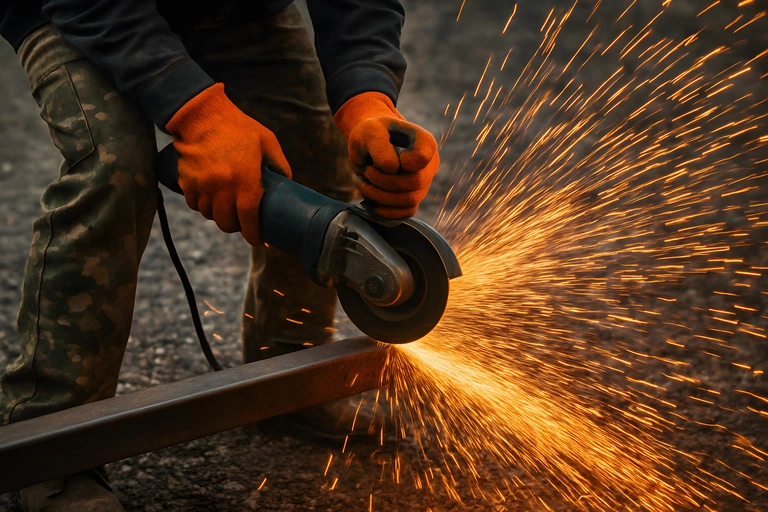
Hand and Power Tool Safety Training builds awareness and competence in the safe use of tools common to construction, maintenance and industrial operations — covering the proper selection, inspection, handling and storage of both manual and powered tools.
Special emphasis is placed on identifying tool-specific hazards, using the right PPE, and following manufacturer guidelines and regulatory standards. Through real-world case discussions, participants learn how to prevent injuries such as lacerations, punctures, electric shocks and eye trauma.
The course also introduces key control measures — tool guarding, grounding and lockout procedures — so learners can confidently handle tools while minimising risk to themselves and those around them.
Get a Customised Programme →The 5 Core Tool Hazards Every Worker Must Control
Safe tool use starts with hazard recognition. NIST Global's training builds deep awareness of how each tool hazard occurs — and the controls that prevent it.
Sharp blades, slipping tools and reaching toward the body cause the most common tool injuries — cuts, punctures and amputations. A blunt or wrong tool is often more dangerous than a sharp, correct one.
- Dull, damaged or wrong tools
- Cutting toward the body or hand
- Control: select the right, well-maintained tool
- Control: cut-resistant gloves and safe stance
- Control: keep guards and blade covers in place
Powered tools with damaged cords, missing earth or wet conditions can deliver fatal shocks. Electrical safety is the defining hazard that separates power tools from hand tools.
- Frayed cords and damaged plugs
- Missing earthing or wet environments
- Control: grounding and double-insulated tools
- Control: RCD/ELCB protection
- Control: inspect before use; lockout for repair
Grinding, chipping and cutting throw particles and sparks at high speed. Eye injuries are among the most common — and most preventable — power tool incidents.
- Flying chips, dust and sparks
- No eye protection during grinding
- Control: safety glasses, goggles or face shield
- Control: keep guards fitted
- Control: position to avoid the line of fire
Discs can shatter, fixings can be ejected and workpieces can kick back. A tool that fails or is misused becomes a high-energy projectile risk for the operator and bystanders.
- Shattered discs and ejected fixings
- Kickback from binding tools
- Control: correct disc/accessory rating
- Control: secure the workpiece and guards
- Control: keep bystanders clear of the zone
Prolonged use of vibrating and heavy tools causes hand-arm vibration syndrome (HAVS), repetitive strain and musculoskeletal injury that build silently over time.
- Extended exposure to vibrating tools
- Awkward postures and repetitive force
- Control: low-vibration tools and anti-vibe gloves
- Control: job rotation and rest breaks
- Control: correct grip, posture and support
What Your Team Will Be Able to Do After This Training
Practical, on-the-job competencies — participants leave able to handle tools confidently and safely, contributing to an incident-free workplace.
Right Tool for the Job
Select the correct tool for each task, avoiding the unsafe improvisation that causes injuries.
Pre-Use Inspection
Inspect tools before and after use to catch defects early and extend tool life.
Safe Handling & Storage
Apply correct handling, storage and maintenance procedures to keep tools and people safe.
Guarding & Grounding
Use tool guarding, grounding and lockout to control electrical and mechanical hazards.
Correct PPE Use
Select and use the right PPE — eye protection, gloves and more — for each tool and task.
Confident, Compliant Work
Work with assurance under SOPs and standards, reducing hesitation and unsafe shortcuts.
Measurable Value at Every Level of Your Organisation
Whether you lead EHS, supervise a crew, or use tools hands-on, this training delivers protection and ROI.
Compliance & Audit Readiness
Align with OSHA, IS standards and internal protocols — avoiding penalties and audit issues.
Extended Tool Life & Lower Costs
Proper care and maintenance prolong tool lifespan and cut repair and replacement costs.
Stronger Safety Culture
Reinforce the company's commitment to wellbeing, boosting morale and safety awareness.
Standardised Procedures
Clear SOPs and uniform practices improve coordination and reduce unsafe shortcuts.
Less Downtime & Damage
Correct use and maintenance reduce breakdowns, rework and unplanned stoppages.
Higher Productivity
Confident, trained personnel complete tasks faster and safer, improving workflow.
Fewer Tool-Related Injuries
Reduce cuts, shocks, eye injuries and strain through safe handling practices.
Inspection & Maintenance Skills
Routine checks reduce equipment failure and keep tools reliable and safe.
Confidence in Handling Tools
Understand tool functions, hazards and controls — reducing hesitation and improvisation.
Built for Everyone Who Uses or Oversees Tools
Ideal for anyone involved in using, handling, maintaining or supervising hand and power tools across construction, manufacturing, facilities, utilities and engineering services.
How We Deliver Tool Safety Training
Every session blends experiential methods — so participants can observe, apply and retain learning from day one on the job.
NIST Global by the Numbers
Our Impact Speaks for Itself
Measurable outcomes across 500+ organisations — because a world-class safety culture is built on data, not assumptions.
Industries We Serve with Tool Safety Training in India
Our training is fully customised to the tools, tasks and regulatory needs of your industry.
Construction & Infrastructure
Manufacturing & Fabrication
Oil, Gas & Energy
Facilities & Maintenance
FMCG & Warehousing
Utilities & Engineering
Real Experiences from Organisations We've Trained
Trusted by EHS leaders across India's most demanding and high-risk industries.


Frequently Asked Questions About Hand & Power Tool Safety
Everything corporate safety leaders need to know about NIST Global's Hand and Power Tool Safety Training programme.
Strengthen Your Workplace-Safety Capability Further
For deeper expertise in industrial tools and risk management, explore these complementary NIST Global programmes.
Expert Insights on Tool Safety
Practical guidance from NIST Global's HSE experts — helping safety leaders prevent tool injuries across India.
The 5 Core Hand & Power Tool Hazards
A clear breakdown of cuts, shock, eye injury, struck-by and vibration — and the controls that prevent them.
Read article →How to Inspect a Power Tool Before Use
A simple pre-use checklist that catches defects before they cause injury or downtime.
Read article →Tool Guarding, Grounding & Lockout Explained
The key engineering controls that keep powered tools safe to operate.
Read article →Get a Tool Safety Programme Built Around Your Site
Tell us about your facility and we'll design a customised Hand and Power Tool Safety Training programme — delivered on-site at your location or virtually across India.
- ✓Client, industry and site-specific content
- ✓On-site delivery at your facility across India
- ✓Available in English, Tamil, Hindi & regional languages
- ✓Hands-on inspection, guarding & PPE practice
- ✓Aligned with OSHA & IS standards
- ✓Participation / competency certificate on completion
Prefer to call directly?
+91 87544 65588