
ISO 45001 Awareness Training — India
Understand the Standard.
Build the Safety System
Behind It.
ISO 45001:2018 is not just a certification target — it's the internationally recognised framework for building a workplace where occupational health and safety is systematically managed. NIST Global's ISO 45001 Awareness Training gives every person in your organisation a clear, practical understanding of the standard's requirements, their role within it, and how it connects to their daily work.
Build the OHSMS knowledge your workforce needs
The Gap
Why ISO 45001 Certification Fails Without Organisation-Wide Awareness
ISO 45001 certification is often pursued top-down — by HSE teams and consultants — while the workforce that must actually live the system remains unaware of what it requires or why it matters.
Clause 7.3 is a mandatory requirement
ISO 45001 explicitly requires that all workers are aware of the OH&S policy, their contribution to the OHSMS, the consequences of non-conformance, and relevant hazards in their area. Certification auditors will test this — and findings are common.
OHSMS documents without understanding
Many organisations have ISO 45001 documentation — procedures, risk assessments, objectives — that employees cannot explain or apply. A system that exists only on paper fails its purpose and fails certification surveillance audits.
Worker participation is under-implemented
ISO 45001 places far greater emphasis on worker consultation and participation than OHSAS 18001 did. Without awareness training, employees cannot meaningfully participate in hazard identification, incident reporting, or OHSMS improvement processes.
Leadership obligations go unmet
Clause 5.1 places specific obligations on top management — demonstrating leadership, integrating OHSMS into business processes, promoting safety culture. Managers who haven't been trained on the standard cannot fulfil obligations they don't understand.
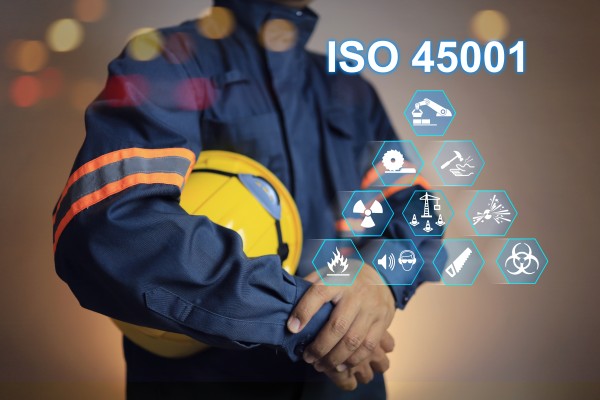
From Standard Document to Living Safety System
ISO 45001 Awareness Training is an interactive, scenario-driven programme that introduces employees, supervisors, managers, and HSE professionals to the principles, structure, and practical requirements of ISO 45001:2018 — the internationally recognised standard for Occupational Health and Safety Management Systems (OHSMS).
The programme covers all 10 clauses of the standard in plain language, explaining what each clause requires, who is responsible, and how it connects to real workplace activities. Participants gain a clear understanding of the PDCA (Plan-Do-Check-Act) cycle, the concept of context and interested parties, hazard identification and risk assessment obligations, leadership requirements, and the continual improvement process.
NIST Global's ISO 45001 Awareness Training is modular and fully customisable — allowing the content depth, industry examples, and focus areas to be tailored to the audience, whether frontline workers receiving a half-day foundation session or senior managers attending a full-day leadership-focused programme.
On completion, participants understand what the standard requires, what their specific role within the OHSMS is, and how their daily activities contribute to occupational health and safety performance and ISO 45001 certification readiness.
Get a Customised ISO 45001 Programme →ISO 45001 & the PDCA Cycle — The Engine of Continual Improvement
ISO 45001:2018 is built on the Plan-Do-Check-Act model — a continuous loop of hazard identification, operational control, performance monitoring, and improvement. Every clause maps to one of these four phases. Understanding the PDCA cycle is the key to understanding the standard.
Establish context, identify hazards, set objectives
- Understand the organisation and its context (Cl. 4)
- Identify interested parties and their needs (Cl. 4)
- Demonstrate leadership commitment (Cl. 5)
- Establish the OH&S policy (Cl. 5)
- Identify hazards and assess risks (Cl. 6)
- Identify legal and other requirements (Cl. 6)
- Set OH&S objectives and plan to achieve them (Cl. 6)
Implement controls, build competence, manage operations
- Provide resources and assign competencies (Cl. 7)
- Ensure worker awareness — Clause 7.3 (Cl. 7)
- Establish communication protocols (Cl. 7)
- Control documented information (Cl. 7)
- Implement operational controls (Cl. 8)
- Manage contractors and procurement (Cl. 8)
- Plan for emergency preparedness (Cl. 8)
Monitor performance, audit, and review
- Monitor and measure OH&S performance (Cl. 9)
- Evaluate compliance with legal requirements (Cl. 9)
- Conduct internal audits (Cl. 9.2)
- Perform management review (Cl. 9.3)
- Analyse incidents and trends (Cl. 9)
Correct, improve, and strengthen the system
- Investigate incidents and nonconformities (Cl. 10)
- Implement corrective actions (Cl. 10)
- Eliminate root causes to prevent recurrence (Cl. 10)
- Drive continual improvement (Cl. 10.3)
- Update risk assessments and controls (Cl. 10)
ISO 45001 — All 10 Clauses Explained
Explore what each clause of ISO 45001:2018 requires and how NIST Global's training brings each requirement to life in your workplace context.
Context of the Organisation
Clause 4 requires the organisation to understand the internal and external issues that affect its OH&S performance, identify the workers and other interested parties relevant to the OHSMS, understand their needs and expectations, and define the scope of the management system. This is the foundation clause — without a clear context, hazard identification and risk assessment lose their anchoring in the real operating environment.
Key requirements covered in training
- Internal issues — organisational culture, resources, governance
- External issues — legal environment, market, geography, society
- Workers and interested parties — identifying who has a stake in OHSMS
- Needs and expectations of interested parties
- Defining the OHSMS scope
- OHSMS integration with business processes
Leadership & Worker Participation
Clause 5 places explicit obligations on top management — not on the HSE team alone. Leaders must demonstrate personal commitment, establish and communicate the OH&S policy, assign roles and responsibilities, and ensure the OHSMS is integrated into business strategy. Critically, Clause 5 also introduces strong requirements for worker consultation and participation in hazard identification, risk assessment, and incident investigation — a major shift from OHSAS 18001.
Key requirements covered in training
- Top management leadership obligations (Cl. 5.1)
- OH&S policy — content, communication, and availability (Cl. 5.2)
- Organisational roles, responsibilities, and authorities (Cl. 5.3)
- Worker consultation mechanisms (Cl. 5.4)
- Worker participation in hazard identification (Cl. 5.4)
- Removing barriers to worker participation (Cl. 5.4)
Planning
Clause 6 is where risks and opportunities are identified and addressed. It requires a systematic hazard identification process, a risk assessment methodology, evaluation of legal and other requirements, and the setting of measurable OH&S objectives with plans to achieve them. ISO 45001's risk-based approach in Clause 6 distinguishes it from OHSAS 18001 by requiring consideration of both OH&S risks and the opportunities that could improve performance.
Key requirements covered in training
- Actions to address risks and opportunities (Cl. 6.1)
- Hazard identification — systematic process (Cl. 6.1.2)
- Risk assessment and risk control hierarchy (Cl. 6.1.2)
- Legal and other requirements identification (Cl. 6.1.3)
- Planning actions to address risks (Cl. 6.1.4)
- OH&S objectives — SMART, measurable, monitored (Cl. 6.2)
Support
Clause 7 covers the resources, competence, and communication infrastructure the OHSMS needs to function. Clause 7.3 — Awareness — is directly relevant to this training: it specifies that all workers must be aware of the OH&S policy, their contribution to the OHSMS, the consequences of non-conformance, and relevant hazards and risks. Completing ISO 45001 Awareness Training directly satisfies this clause and provides documented evidence for audits.
Key requirements covered in training
- Resources — human, infrastructure, financial (Cl. 7.1)
- Competence determination and evaluation (Cl. 7.2)
- Awareness — Clause 7.3 (this training directly satisfies)
- Communication — internal and external (Cl. 7.4)
- Documented information — creation and control (Cl. 7.5)
Operation
Clause 8 covers how the OHSMS is put into practice day-to-day. It includes operational planning and control, management of change, procurement controls, contractor and outsourced worker management, and emergency preparedness and response. This clause connects the planning in Clause 6 to actual workplace activities — ensuring that the controls identified in risk assessments are implemented and maintained.
Key requirements covered in training
- Operational planning and control — applying the hierarchy of controls (Cl. 8.1)
- Management of change — planned and unplanned (Cl. 8.1.3)
- Procurement — OH&S in purchasing decisions (Cl. 8.1.4)
- Contractor and outsourced worker management (Cl. 8.1.4)
- Emergency preparedness and response (Cl. 8.2)
Performance Evaluation
Clause 9 requires the organisation to systematically monitor, measure, analyse, and evaluate its OH&S performance against its objectives and legal requirements. It mandates a formal compliance evaluation process, internal audit programme, and regular management review. Together, these processes provide the evidence base that both internal stakeholders and external certification auditors use to assess the effectiveness of the OHSMS.
Key requirements covered in training
- Monitoring and measurement — what, how, when (Cl. 9.1)
- Compliance evaluation — frequency and methodology (Cl. 9.1.2)
- Internal audit programme and criteria (Cl. 9.2)
- Internal auditor competence requirements (Cl. 9.2)
- Management review — inputs, outputs, and actions (Cl. 9.3)
Improvement
Clause 10 is the Act phase of the PDCA cycle — closing the loop on the entire management system. It requires that incidents and nonconformities are investigated, root causes identified, corrective actions implemented and evaluated, and that the organisation continually improves the suitability, adequacy, and effectiveness of the OHSMS over time. Without Clause 10, the system would be static — fulfilling certification requirements once but never improving.
Key requirements covered in training
- Incident, nonconformity, and near-miss reporting (Cl. 10.2)
- Root cause analysis methodology (Cl. 10.2)
- Corrective actions — implementation and effectiveness review (Cl. 10.2)
- Documenting and communicating corrective actions (Cl. 10.2)
- Continual improvement — demonstrating trend and intent (Cl. 10.3)
What Participants Will Be Able to Do After Training
Observable, measurable competencies — covering individual awareness, workplace application, and the organisation's certification readiness requirements.
Explain ISO 45001 in Plain Language
Describe the purpose, structure, and key requirements of ISO 45001:2018 in plain language — to colleagues, auditors, and clients — without relying on jargon or document lookup. Understand where ISO 45001 fits in the ISO management system landscape alongside ISO 9001 and ISO 14001.
Apply the PDCA Cycle to Daily Work
Map their own work activities and responsibilities to the Plan-Do-Check-Act framework — understanding how individual actions in hazard reporting, incident investigation, and safety observation contribute to the continual improvement process required by the standard.
Participate in Hazard Identification and Risk Assessment
Understand the organisation's hazard identification and risk assessment process — contributing as an active participant rather than a passive recipient. Know how to report hazards, what the risk control hierarchy means, and how their inputs feed into the OH&S objectives and controls.
Demonstrate Awareness Compliance
Articulate — in an audit context — their awareness of the OH&S policy, their contribution to the OHSMS, the consequences of non-conformance, and the hazards and risks relevant to their role. This directly satisfies the Clause 7.3 awareness requirement and provides documented evidence for certification audits.
Fulfil Leadership Obligations Under Clause 5
Managers and supervisors understand the specific obligations ISO 45001 places on leadership — including demonstrating commitment, integrating OHSMS into business processes, ensuring worker participation, and making the OHSMS a lived system rather than a compliance document.
Support the Organisation's Certification Journey
Understand the ISO 45001 certification process — initial certification audit, surveillance audits, and recertification — and know what auditors look for, what constitutes a nonconformity, and how their day-to-day OHSMS participation contributes to a successful audit outcome.
Benefits for Every Level of Your Organisation
From the frontline worker required by Clause 7.3 to understand their role, to the senior manager with Clause 5.1 leadership obligations — awareness training delivers value at every level.
Clause 7.3 Compliance Evidence
Documented training completion records provide direct audit evidence that the Clause 7.3 awareness requirement has been met — reducing the likelihood of major nonconformities during ISO 45001 certification and surveillance audits.
More Effective Hazard Identification
A workforce that understands the OHSMS hazard identification process contributes more meaningful hazard reports, near-miss notifications, and improvement suggestions — improving the quality of risk assessments and reducing the gap between the documented system and operational reality.
Smoother Certification & Audit Process
Auditors interview workers and managers at multiple levels during ISO 45001 certification. A workforce that can confidently articulate OH&S policy, their OHSMS role, and relevant hazards significantly reduces audit risk and the likelihood of Clause 7.3 major nonconformities.
Understanding of Their OHSMS Role
Employees understand what the OHSMS is, why it exists, and specifically what their role within it is — transforming ISO 45001 from an abstract certification requirement into a practical framework they actively participate in every working day.
Confidence to Participate and Report
Understanding the system builds confidence to report hazards, near misses, and improvement ideas — knowing those inputs feed into a structured improvement process rather than disappearing into a suggestion box.
Professional Development & Certificate
Participants receive a Certificate of Completion on successful assessment — providing a documented and verifiable credential that supports individual professional development records and CV building for safety-conscious career progression.
Reduced Legal & Regulatory Exposure
ISO 45001 awareness strengthens the organisation's ability to demonstrate compliance with legal and regulatory OH&S obligations — reducing exposure to penalties, enforcement actions, and reputational risk from incidents that a functioning OHSMS would have prevented.
Stronger Safety Culture
Organisation-wide awareness creates a common safety language and shared understanding of the OHSMS — building the proactive safety culture that ISO 45001 is designed to develop, and that distinguishes organisations with genuine safety commitment from those with compliance paperwork.
Cost Savings Through Prevention
Preventing incidents reduces costs across multiple dimensions — lost-time injury claims, medical treatment, compensation, production downtime, equipment damage, regulatory penalties, and the reputational damage that follows major OH&S failures.
How NIST Global Delivers ISO 45001 Awareness Training
Interactive, not lecture-based. Every session uses practical examples from your industry, group exercises, and real audit scenarios to ensure understanding — not just attendance.
NIST Global by the Numbers
Trusted Across India's Most Demanding Industries
18+ years of exclusive HSE focus delivering measurable outcomes across 500+ organisations and 35+ industry sectors.
ISO 45001 Awareness Training Is Relevant For Everyone
Clause 7.3 requires all workers to be aware of the OHSMS — making this training applicable to every level of the organisation, not just the HSE team.
Frontline Workers & Operatives
All workers who need to understand the OH&S policy, their safety responsibilities, the hazards in their work area, and the consequences of OHSMS non-conformance — fulfilling the mandatory Clause 7.3 awareness requirement.
Supervisors & Team Leaders
First-line supervisors implementing operational controls, conducting toolbox talks, managing contractor safety, and supporting hazard identification — needing to understand both their Clause 8 operational responsibilities and their Clause 5.4 worker participation obligations.
Managers & Department Heads
Leaders with Clause 5.1 obligations — demonstrating personal commitment, integrating OHSMS into departmental objectives, providing resources, and participating in management review — who need a thorough understanding of what the standard expects of leadership.
HSE & Safety Professionals
EHS officers and safety managers implementing and maintaining the OHSMS — who need a solid foundation in the standard's requirements before progressing to ISO 45001 Internal Auditor or Lead Auditor training.
Internal Auditors
Individuals who will conduct ISO 45001 internal audits — for whom awareness training is the prerequisite that ensures they understand what they are auditing against before they learn how to audit it.
Quality & Compliance Teams
Professionals managing ISO 9001 or ISO 14001 who are extending their scope to integrate ISO 45001 — using the shared High Level Structure to build an integrated management system across quality, environment, and occupational health and safety.
ISO 45001 Awareness Training for Every Industry Sector
ISO 45001 is the universal OHSMS standard — applicable to all organisations regardless of size, sector, or geography. NIST Global customises examples, case studies, and exercises to your industry's specific risk profile.
Oil, Gas & Energy
Manufacturing & Industrial
Construction & Infrastructure
Chemical & Pharma
Healthcare
Corporate & Services
Build on ISO 45001 Awareness with NIST Global's OHSMS Portfolio
Awareness training is the foundation. Pair it with ISO 45001 Consultancy, Internal Auditor training, and NEBOSH to build a complete OHSMS competency pathway for your organisation.
Real Experiences from Organisations We've Trained
Trusted by EHS leaders and safety professionals across India's most demanding and compliance-focused industries.
Frequently Asked Questions About ISO 45001 Awareness Training
Clear, complete answers to the questions EHS managers, safety professionals, and business leaders ask most about ISO 45001 and NIST Global's awareness training programme.
Expert Insights on ISO 45001 & Occupational Health and Safety Management
Practical guidance from NIST Global's HSE experts — helping EHS managers implement, audit, and continuously improve ISO 45001 OHSMS across India.
Importance of Safety Audits — Goals & Significance
Why regular safety audits are essential to an ISO 45001 OHSMS — and how they connect to Clause 9 performance evaluation and continual improvement requirements.
Read article →Why Mock Drills Are Important for Workplace Safety
How mock drills fulfil the ISO 45001 Clause 8.2 emergency preparedness requirement — and how they contribute to demonstrating a functioning, tested OHSMS during certification audits.
Read article →The Importance of ERT Mock Drills for Your Facility
Integrating ERT training and mock drills into your ISO 45001 OHSMS — fulfilling Clause 8.2 and demonstrating operational control effectiveness during certification audits.
Read article →Corporate Safety Training Across India's Key Industrial Hubs
NIST Global delivers customised safety training for employees across India, bringing expert trainers directly to your facility. Our programmes are available onsite or virtually, with regional language options to meet your workforce needs.
Get an ISO 45001 Programme Customised for Your Organisation
Tell us about your organisation and we'll design a fully customised ISO 45001 Awareness Training programme — modular, role-levelled, and delivered on-site or virtually anywhere across India.
- ✓All 10 clauses covered — plain language, practical application
- ✓Modular — customised depth for workers, supervisors, and management
- ✓Directly satisfies ISO 45001 Clause 7.3 awareness requirement
- ✓Certificate of Completion for audit evidence
- ✓On-site delivery or virtual — anywhere across India
- ✓Available in English, Tamil, Hindi, and regional languages
Prefer to call directly?
+91 87544 65588