

Construction Safety Training in India — From Fatal Four to Full Site Coverage.
India's construction industry accounts for more workplace fatalities than any other sector. Behind every statistic is a hazard that was identifiable, a risk that was controllable, and a training gap that was preventable. NIST Global's Construction Safety Training gives your workforce — from site workers to supervisors — the practical knowledge and safety mindset to identify, control, and respond to the hazards that kill and injure on construction sites every day.
Site-specific construction safety — built for your project
The Reality
Why Construction Remains India's Most Dangerous Industry
Construction fatalities in India are not accidents of bad luck. They are the predictable consequences of identifiable hazards that were not adequately controlled — and workers who were not adequately trained.
Falls — the #1 cause of construction deaths
Falls from scaffolding, roofs, ladder overreaches, and unprotected floor openings account for the majority of construction fatalities in India. Most are preventable with correct fall protection — guardrails, harnesses, and covers that are present on site but not properly used by workers who haven't been trained in their application.
Plant and vehicle contact — inadequate segregation
Construction sites combine pedestrian workers with heavy plant, cranes, and vehicles in confined areas. Without training on exclusion zones, signalling, and pedestrian-vehicle segregation, struck-by incidents — often fatal — are an inevitability rather than a possibility.
Excavation collapse — no edge protection or inspection
Trench and excavation collapses entomb workers within seconds. Many sites begin excavation without adequate shoring, battering, or inspection — and workers enter trenches without understanding the collapse risk or the warning signs of ground instability.
BOCW Act compliance — obligations unknown on site
The BOCW Act 1996 imposes specific safety obligations on construction employers — trained safety personnel, welfare facilities, safe scaffolding, and documented emergency plans. Most site supervisors and workers are unaware of these obligations until an incident triggers enforcement action.
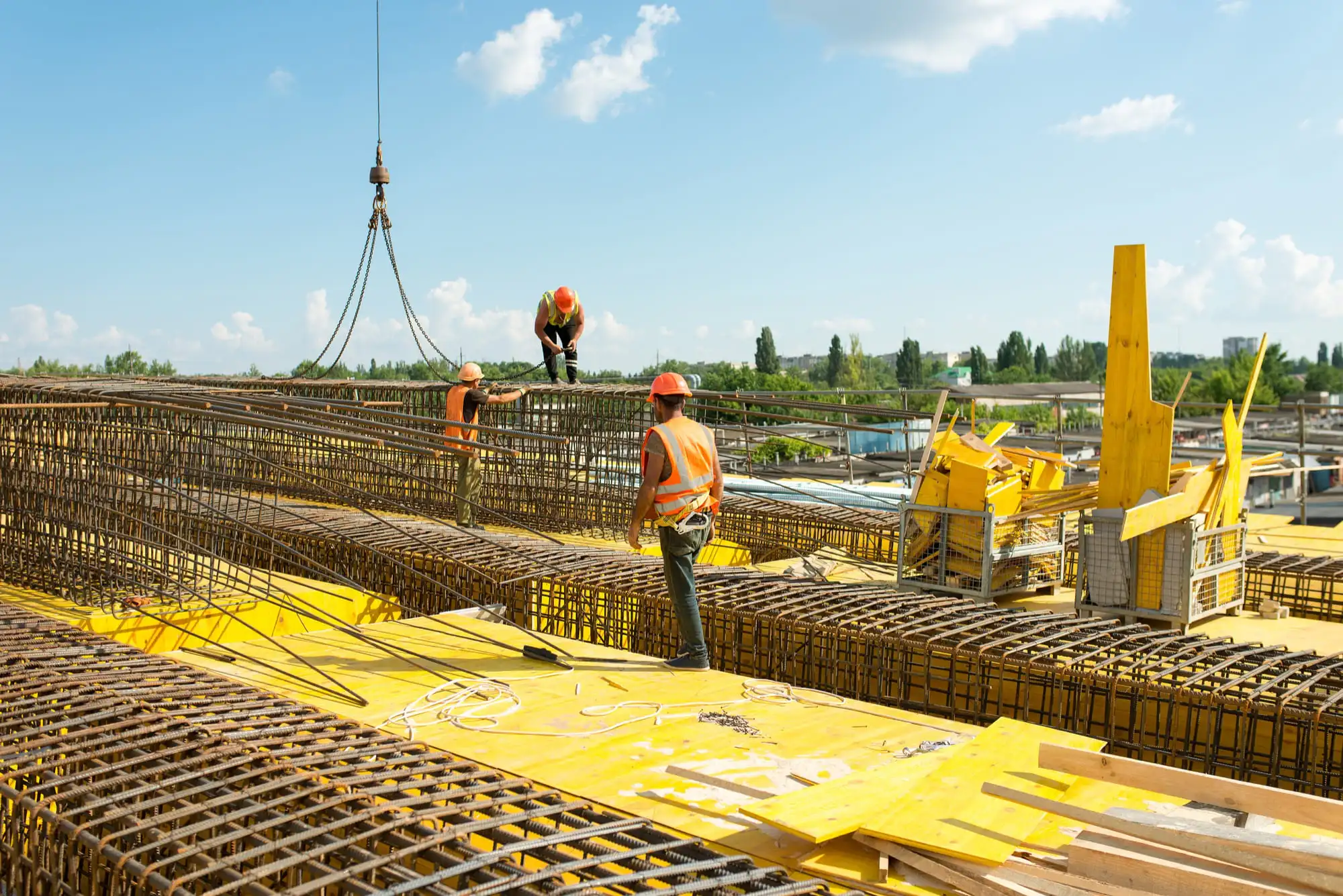
From Hazard Awareness to Zero-Incident Site Culture
NIST Global's Construction Safety Training is a comprehensive, site-specific programme that builds the hazard identification, risk control, and emergency response competencies that construction workers, supervisors, engineers, and HSE personnel need to prevent the incidents that cause the most harm on Indian construction sites.
The programme goes beyond a checklist of safety rules. Participants develop the ability to identify site-specific hazards, assess risk levels, apply the hierarchy of controls, and make safe decisions under the time pressure and physical complexity of an active construction environment — not just in a classroom exercise.
Every NIST Global construction safety programme is customised to the project type, site conditions, workforce profile, and applicable regulations — whether a commercial high-rise, an industrial facility, a civil infrastructure project, or a petrochemical construction site. Training can be structured as a site induction, a supervisory safety leadership session, or a full-day comprehensive programme.
Aligned with the BOCW Act 1996, BOCW Rules 1998, relevant Indian Standards (IS 4014, IS 3696, IS 1891), and ISO 45001 occupational health and safety management requirements.
Get a Site-Specific Construction Safety Programme →The Four Hazards That Kill Most Construction Workers
Globally and in India, four hazard categories account for the majority of construction fatalities. Understanding and controlling the Fatal Four is the foundation of every effective construction safety programme — and the focus of NIST Global's training.
Falls account for the single largest proportion of construction fatalities worldwide — and in India, inadequate fall protection on scaffolding, roofs, floor openings, and elevated platforms contributes significantly to the industry's fatality rate. The critical insight is that most fatal falls occur from heights below 4 metres — where workers often believe the risk is low and therefore do not use available fall protection equipment. Training must address this risk perception gap directly.
- Guardrail systems — minimum height, strength, and intermediate rail requirements
- Personal Fall Arrest Systems (PFAS) — harness selection, anchor strength, and lanyard type
- Floor and roof opening covers — load-rated, secured, and marked
- Scaffolding inspection before use — decking, guardrails, base plates, ties
- Ladder safety — angle (4:1), footing, extending above landing, 3-point contact
- Leading edge work controls — lifeline systems and self-retracting lanyards
- Pre-task inspection and hazard reporting for height work activities
Struck-by incidents involve workers being hit by moving vehicles, swinging crane loads, ejected fragments from power tools, falling objects from heights, or collapsing structures. On active construction sites where multiple trades work simultaneously, the potential for objects to strike workers is high. Hard hat use, exclusion zones during lifting operations, flying object containment during demolition, and vehicle-pedestrian segregation are the critical controls. Training must develop awareness of blind spots, work sequence conflicts, and the moment exclusion zones are most likely to be breached.
- Hard hat (helmet) selection, inspection, and mandatory use zones
- Vehicle and pedestrian segregation — physical barriers, crossing points, signage
- Lifting exclusion zones — establishing, marking, and enforcing around crane operations
- Overhead protection — fans, nets, and toe boards on scaffolding
- High-visibility vest use near vehicle and plant movements
- Banksman and signaller requirements for reversing and blind-spot operations
- Flying object protection during demolition, grinding, and cutting activities
Caught-in/between incidents include workers being trapped in collapsing excavations or trenches, entangled in unguarded rotating machinery, and crushed between moving plant and fixed objects. Trench collapses are particularly lethal — unsupported trenches can collapse within seconds, and the weight of soil provides no time for escape. Machinery entanglement typically occurs during cleaning, maintenance, or clearing tasks with machinery running — a situation that lockout/tagout (LOTO) procedures are specifically designed to prevent.
- Excavation shoring systems — timber, sheet piling, and trench boxes
- Battering and benching — safe slope angles for different soil types
- Pre-entry excavation inspection — daily and after adverse weather or ground disturbance
- Spoil heap positioning — minimum 1 metre from trench edge
- Machine guarding requirements — all rotating and reciprocating parts
- Lockout/tagout (LOTO) procedure for machinery maintenance and cleaning
- Safe distance from tracked and wheeled plant during operation
Electrocution on construction sites occurs from three primary sources: contact with overhead power lines during lifting operations, scaffold erection, or concrete pumping; contact with inadequately protected temporary site electrical installations; and contact with buried electrical services during excavation. Overhead power lines are particularly hazardous because workers often underestimate the safe working distance required — actual contact is not always necessary, as electrical current can arc across a gap. Training must address safe working distances, permit-to-work requirements for overhead line proximity work, and buried service identification before excavation.
- Overhead power line safe working distances — isolation, goal posts, or physical barriers
- Buried service identification — drawing review, service locator use, trial holes
- Temporary electrical installation requirements — RCDs, rated cable, weatherproofing
- Portable electrical equipment inspection — colour-coding, PAT, visual check
- Permit-to-work for work near or over overhead power lines
- Emergency response for electrical contact — do not touch, isolate, CPR
- Low-voltage vs high-voltage awareness and safe distance requirements
Construction Site Activities Covered in This Programme
Beyond the Fatal Four, NIST Global's construction safety training covers every major high-risk activity category encountered on Indian construction sites.
Work at height is defined as any work where a person could fall a distance liable to cause personal injury — including from ground level into an excavation. The hierarchy of controls for work at height requires first avoiding the task at height (redesigning), then preventing falls (guardrails, platforms), then minimising fall distance (PFAS, safety nets), then avoiding injury on landing (airbags, safety nets). NIST Global's training covers the full hierarchy with practical application to common construction tasks.
- Hierarchy of controls for work at height
- Collective protection (guardrails) vs personal protection (PFAS)
- PFAS components — harness, anchor, lanyard, and shock absorber
- Fall arrest vs restraint — selecting the right system
- Ladder safety — types, angle, securing, and maximum height
- Mobile Elevated Work Platform (MEWP) awareness
- Edge protection for roofs, floor openings, and leading edges
- Rescue planning — what to do if a worker falls in their harness
Scaffolding is involved in a disproportionate number of construction fatalities — both from workers falling from inadequately guarded scaffolding, and from scaffolding structures collapsing due to improper erection, overloading, or inadequate inspection. Users (workers who access but don't erect scaffolding) have specific safety obligations and must understand what to look for before and during use — independent of the erector's responsibilities.
- Scaffold types — tube and coupler, system scaffold, putlog
- Pre-use scaffold inspection checklist — decking, guardrails, ties, base plates
- Safe loading — not overloading scaffold platforms
- Access and egress — proper use of ladder access, not climbing the structure
- Reporting scaffold defects — do not use and notify procedure
- IS 4014 requirements for scaffold construction and inspection
- Weather and ground condition effects on scaffold stability
Excavation collapses kill workers within seconds — there is no warning, no time to react, and the weight of soil is lethal. Yet many Indian construction sites begin excavation without any shoring, battering, or inspection of the excavation faces. Training must overcome the normalisation of unsafe excavation practice that exists on many sites, and establish a clear understanding of why collapse risk is not visible or predictable without engineering assessment.
- Soil types and their collapse risk — cohesive vs granular
- Safe trench depth limits without support — 1.2m rule
- Shoring systems — timber, sheet piling, hydraulic trench boxes
- Battering and benching safe slope angles by soil type
- Spoil heap positioning and surcharge load effects
- Daily excavation inspection — before entry, after rainfall, after blasting
- Underground service identification before excavation begins
- Emergency rescue from excavation collapse
Crane and lifting operations on construction sites create significant risks for both the operator and workers in the vicinity — from dropped loads, unstable crane configurations, and failure of lifting accessories. Workers in the vicinity of lifting operations are frequently struck by loads — either due to inadequate exclusion zones or to load swing on flexible cranes. Training covers both the lift planning obligations of the lifting team and the safety awareness required of all site workers in a lifting zone.
- Lifting exclusion zones — establishing, marking, and enforcing
- Basic rigging awareness — sling angles and rated load reductions
- Visual inspection of lifting accessories before use
- Signalling and banksman communication
- Tag line use for load control
- Never stand under a suspended load
- Crane radius and outrigger requirements awareness
- Reporting defective or overloaded lifting equipment
Hot work — welding, cutting, grinding, and brazing — is a major source of fire on construction sites, particularly where flammable materials are nearby or where sparks can fall to lower levels through floor openings, cable trays, or gaps in temporary works. Construction site fires spread rapidly due to the abundance of combustible materials, poor compartmentation, and limited suppression. Hot work permits and fire watch procedures are the primary controls.
- Hot work permit-to-work system — issuing, conditions, and sign-off
- Pre-hot work area preparation — removing combustibles within 10-metre radius
- Spark containment — welding screens, fire blankets, drip trays
- Fire watch during and after hot work — minimum 30 minutes post-completion
- Fire extinguisher positioning and correct type for hot work fires
- Cylinder storage and handling — acetylene and LPG on construction sites
- Identification and protection of combustible site materials
A Complete Construction Safety Curriculum — Customised for Your Site
Every topic is taught through instructor-led sessions, case study analysis, and site-based hazard identification exercises — building safety competency that workers can apply from day one.
Site Hazard Identification & Risk Assessment (HIRA)
Systematic identification of construction site hazards by activity type — work at height, excavation, lifting, hot work, electrical, and traffic management. Risk matrix assessment, hierarchy of controls application, and HIRA documentation compliant with BOCW Act and IS standards.
Work at Height & Fall Protection
Hierarchy of controls for work at height, PFAS selection and inspection, guardrail standards, ladder safety, MEWP awareness, and rescue planning for suspended workers. India-specific fall protection standards under IS 1891 and BOCW Rules 1998.
Scaffolding Safety for Users & Supervisors
Pre-use scaffold inspection checklists, safe loading requirements, access and egress procedures, defect reporting, IS 4014 compliance requirements, and weather and ground condition effects on scaffold stability.
Excavation & Trenching Safety
Soil classification and collapse risk, shoring system selection, battering and benching principles, daily inspection requirements, buried service identification, spoil heap positioning, and emergency response to excavation collapse.
Electrical Safety on Construction Sites
Overhead power line safe working distances, buried service identification and hand-digging zone requirements, temporary electrical installation standards, portable equipment inspection, LOTO basics, and emergency response to electrical contact.
Plant, Machinery & Vehicle Safety
Pedestrian-vehicle segregation, exclusion zones, high-visibility requirements, machinery guarding, safe approaches to plant, banksman and signaller awareness, and pre-start machine checks relevant to construction site plant.
PPE Selection & Correct Use
Selection, inspection, and correct use of construction PPE: safety helmet, safety boots, hi-vis vest, safety gloves, eye protection, hearing protection, dust mask/respirator, and full-body harness for work at height. Limitations of PPE as a last resort control.
Permit-to-Work Systems
Purpose and operation of permit-to-work for construction's highest-risk activities: hot work, confined space entry, work on live electrical systems, excavation near services, and critical lifting operations. Issuing, conditions, and close-out procedures.
Emergency Response on Construction Sites
Site-specific emergency procedures — fire evacuation, medical emergency, structural collapse, and chemical release. Assembly point locations, emergency contact procedures, site first aid requirements under BOCW Act, and basic casualty management for construction site injuries.
Site Housekeeping & Waste Management
The relationship between poor housekeeping and incident rates — slip and trip hazards, fire load accumulation, obstructed emergency exits, and unstable material stacks. Daily housekeeping standards, waste segregation, and contractor housekeeping obligations.
BOCW Act & Indian Standards Compliance
Key obligations under the BOCW Act 1996 and BOCW Rules 1998 — safety officer requirements, welfare facilities, scaffold standards, lifting equipment requirements, and accident notification. Relevant Indian Standards for construction safety equipment and systems.
Contractor Induction & New Worker Safety
Site induction requirements for new workers and contractors — site rules, emergency procedures, permit-to-work system, PPE requirements, reporting lines, and hazard communication. Effective induction delivery and documentation for BOCW compliance records.
What Workers & Supervisors Will Be Able to Do After Training
Observable, measurable competencies — applicable from the next shift.
Identify Site Hazards Before They Cause Harm
Systematically identify construction site hazards — from the Fatal Four to housekeeping and chemical risks — before beginning any task, using the HIRA approach to assess risk level and determine appropriate controls before work commences.
Apply the Hierarchy of Controls to Real Tasks
Select and apply controls from the hierarchy — elimination, substitution, engineering, administrative, PPE — to construction site hazards in the correct order of preference, not defaulting immediately to PPE as the first rather than last line of defence.
Recognise and Respond to Fatal Four Hazards
Identify the conditions that create falls, struck-by, caught-in/between, and electrocution risks at their specific site, apply the relevant preventive controls for each hazard category, and refuse unsafe work instructions where Fatal Four controls are absent.
Operate Within Permit-to-Work Systems
Understand when a permit-to-work is required, what information it contains, and what obligations it places on both the permit issuer and the permit holder — ensuring high-risk construction activities are never commenced without formal hazard assessment and sign-off.
Report Hazards and Refuse Unsafe Work
Understand the obligation and right to report construction site hazards through the correct channels, stop work when conditions are unsafe, and document near-misses and incidents in a way that supports root cause investigation and prevents recurrence.
Respond Effectively to Site Emergencies
Execute the site-specific emergency response procedures — alarm activation, evacuation, first aid, and communication — for the emergency scenarios most likely to occur at their specific project site, without requiring instruction under pressure.
Benefits for Every Level of Your Organisation
From the site worker required by BOCW Act to understand safe work practices, to the project manager managing contractor safety and client audit requirements — construction safety training delivers measurable value at every level.
BOCW Act Compliance Documentation
Auditable training records demonstrating compliance with BOCW Act 1996 safety training obligations — supporting the organisation during site safety inspections, client prequalification audits, and regulatory enforcement visits.
Site-Specific Hazard Identification Capability
A workforce that actively identifies site hazards — and reports them through the correct channels — provides an early warning system that supplements formal inspections and reduces the incidents that generate formal investigation, enforcement action, and incident costs.
Reduced Regulatory & Legal Exposure
Construction fatalities in India routinely trigger prosecutions under the BOCW Act and IPC Section 304A (causing death by negligence). Demonstrable training — documented, site-specific, and competency-assessed — is a primary defence against personal and corporate liability.
Confidence to Identify and Report Hazards
Training replaces the "this is how we've always done it" normalisation of unsafe practice with the knowledge and confidence to identify what is wrong, understand why it is dangerous, and report it through the correct channels without fear of dismissal.
Right to Refuse Unsafe Work
Understanding legal rights and obligations under the BOCW Act empowers workers to refuse unsafe work instructions — protecting themselves, their colleagues, and the employer from the catastrophic consequences of Fatal Four incidents caused by inadequate controls.
Career Development & Progression
Certified construction safety competency supports career progression from site worker to supervisor, HSE role, or project management — demonstrating the safety leadership capability that clients and principal contractors increasingly demand from site personnel at all levels.
Reduced Incident & Project Cost
A construction fatality or serious injury generates costs that dwarf any training investment — medical, legal, regulatory, insurance, project delay, reputational, and the unquantifiable human cost to the victim's family. Prevention is not just ethical — it is dramatically better economics.
Client & Prequalification Confidence
Major clients, infrastructure developers, and multinational contractors require documented construction safety training as part of contractor prequalification. Demonstrable training capability is a commercial prerequisite for winning and retaining major construction contracts in India.
Zero-Incident Site Culture
Safety training builds the collective safety mindset that sustains zero-incident performance — where every worker understands that their actions affect their colleagues, where hazard reporting is normal behaviour, and where unsafe conditions are corrected before they become incidents.
How NIST Global Delivers Construction Safety Training
Construction safety cannot be learned from slides alone. Every session combines instructor-led delivery with site-based hazard identification exercises, case study analysis of real incidents, and practical demonstrations of PPE use and inspection.
NIST Global by the Numbers
Trusted Across India's Most Demanding Industries
18+ years of exclusive HSE focus delivering measurable outcomes across 500+ organisations and 35+ industry sectors.
Construction Safety Training Is Essential For
Construction safety training applies at every level of a project — from the frontline worker to the project manager. The BOCW Act 1996 requires safety training for all workers on construction sites employing 10 or more persons.
Site Workers & Operatives
The frontline workforce — masons, carpenters, steel fixers, concreters, and general labourers who face the highest direct exposure to Fatal Four hazards and who are the primary target audience for construction safety awareness training.
Site Supervisors & Foremen
First-line supervisors responsible for safe work method implementation, daily toolbox talks, PPE compliance enforcement, and hazard reporting — requiring a deeper understanding of risk assessment and control hierarchy than frontline workers.
Site Engineers & Project Managers
Technical staff responsible for site planning, temporary works design, method statement review, and contractor safety management — requiring competency in construction hazard risk assessment and BOCW Act compliance obligations.
HSE Officers & Safety Personnel
Safety professionals appointed under the BOCW Act (required for sites employing 500+ workers) and HSE managers overseeing construction safety programmes — for whom NIST Global's training provides the technical depth to manage construction site risks effectively.
Maintenance & Utility Workers
Maintenance personnel working within active construction environments — often without the site induction and hazard awareness training that permanent construction workers receive, making them disproportionately vulnerable to construction site hazards.
Contractors & Sub-Contractors
All contractors and sub-contractors working on site — who must receive site induction training on the specific hazards, controls, and emergency procedures of the project they are joining. Principal contractor safety obligations extend to the entire supply chain.
Construction Safety Training for Every Project Type
Construction safety hazards, site conditions, and regulatory requirements vary significantly by project type. NIST Global customises case studies, hazard scenarios, and control content to match your specific construction context.
Commercial & High-Rise
Industrial & Petrochemical
Civil & Infrastructure
Power & Energy
Heavy Construction
Residential Development
Complete Your Construction Safety Programme with NIST Global's Related Training
Construction Safety Training is most effective as part of a layered programme. Pair it with Excavation Safety, Work at Height, and HIRA training for complete construction site safety capability.
Real Experiences from Organisations We've Trained
Trusted by EHS leaders, project managers, and safety professionals across India's construction and infrastructure sectors.
Frequently Asked Questions About Construction Safety Training
Clear, complete answers to the questions project managers, HSE professionals, and safety officers ask most about construction site safety requirements and NIST Global's programme.
Expert Insights on Construction Site Safety & Zero-Incident Site Management
Practical guidance from NIST Global's HSE experts — helping project managers, HSE officers, and site supervisors build safer construction sites across India.
Importance of Construction Safety Management
Why safety management is not a compliance overhead but the foundation of productive, profitable construction project delivery — and the human and business cost of getting it wrong.
Read article →How to Prevent Falls at Construction Sites
Practical fall prevention guidance for Indian construction sites — guardrails, PFAS, scaffolding inspection, ladder safety, and the cultural change needed to make fall protection normal practice rather than an afterthought.
Read article →Construction Site Safety Rules & Regulations in India
The key Indian regulations governing construction site safety — BOCW Act, IS standards, and OSHA — and what employers and workers are legally required to do to comply.
Read article →Get a Construction Safety Programme Built for Your Project & Site
Tell us about your project and we'll design a fully customised Construction Safety Training programme — from site induction for all workers to advanced safety leadership for supervisors and HSE personnel. Delivered on-site or virtually across India.
- ✓Fatal Four, work at height, excavation & electrical safety
- ✓Customised to your project type, site conditions & workforce
- ✓BOCW Act 1996 & ISO 45001 compliant training documentation
- ✓Site induction through to HSE leadership level programmes
- ✓Available for permanent staff, contractors & sub-contractors
- ✓English, Tamil, Hindi, and regional languages
Prefer to call directly?
+91 87544 65588