

Scaffolding Inspection Training in India
A scaffold is only as safe as its last inspection. NIST Global's Scaffolding Inspection Training develops inspectors who can judge the fitness of temporary access structures — applying a systematic top-to-bottom method, measurable acceptance criteria, defect coding and a green/yellow/red tag and release process. Delivered on-site at your facility or virtually across India, with hands-on practice.
🛡️ Release only safe scaffolds · Get expert guidance now
The Challenge
Why Scaffold Inspection Demands Real Competence
Anyone can glance at a scaffold; few can judge it. Without trained inspectors applying clear criteria, unstable bases, missing ties and overloaded platforms slip through — until someone climbs.
Hidden structural defects
Unstable bases, missing ties, weak bracing and overloaded platforms are easy to miss without a systematic method.
Inconsistent go/no-go calls
Without measurable acceptance criteria, "is it safe?" becomes a matter of opinion — and opinions vary dangerously.
Deterioration over time
Weather, modifications and daily use degrade scaffolds — without routine and post-event inspection, decline goes unnoticed.
No audit trail
Inspections without photo evidence, defect codes and tagging records fail client and ISO audits — and can't prove due diligence.
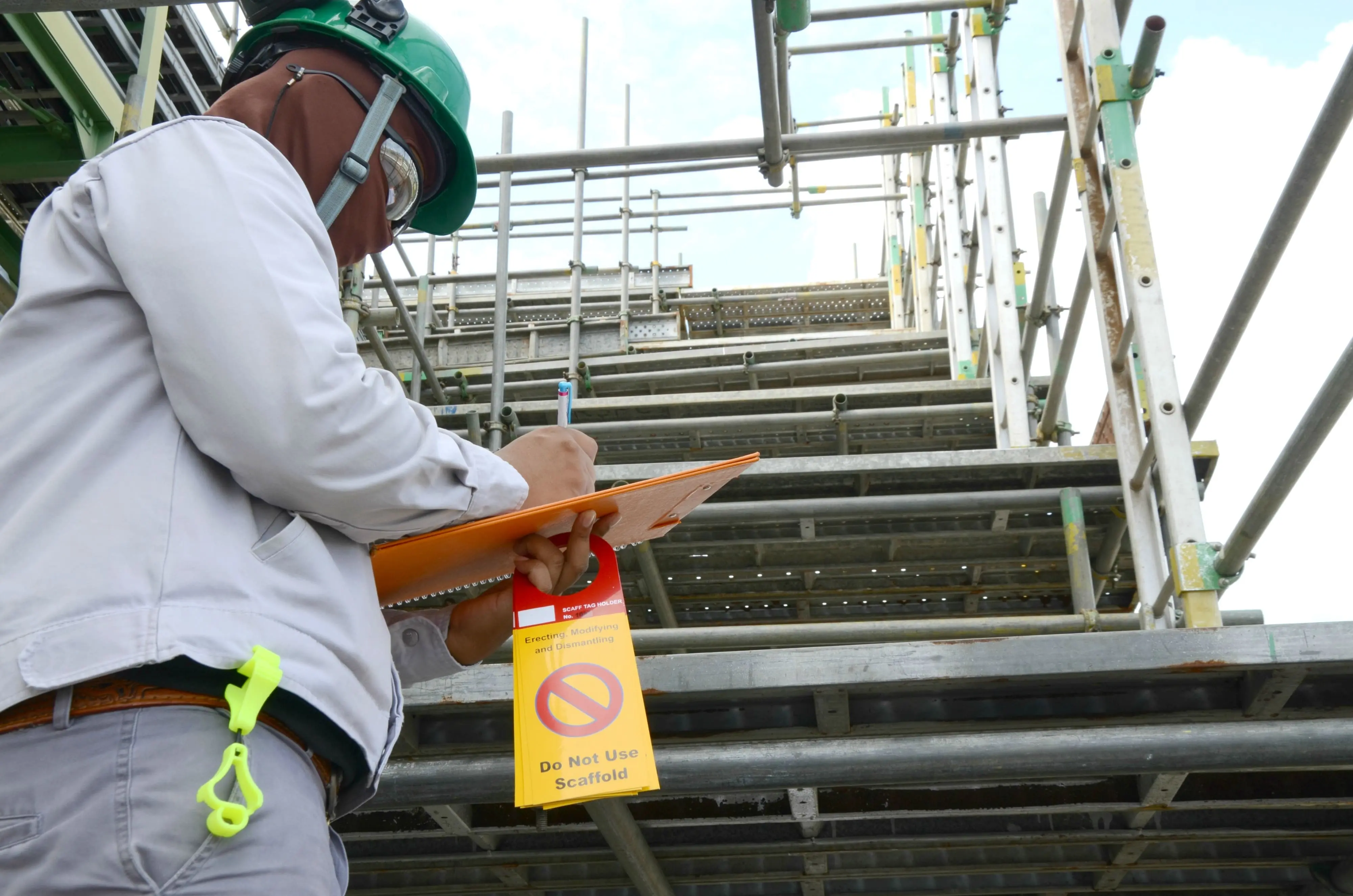
Develop Inspectors Who Can Confidently Accept or Reject a Scaffold
Scaffolding Inspection Training develops scaffold inspectors who can judge the fitness of temporary access structures before and during use. Aimed at supervisors, safety staff and experienced trades, it focuses on the full inspection cycle — initial acceptance checks, routine and periodic reviews, and post-modification or post-weather verifications.
Using real site photos and defect samples, participants practise reading scaffold layouts and load classes, interpreting tie patterns, and recognising warning signs that threaten stability or safe access. They learn a systematic top-to-bottom method and apply quantifiable acceptance criteria — level, plumb, spacing and clearances.
Participants record findings with photographic evidence and defect codes, issue corrective actions, and release structures using a green/yellow/red tag and release process — integrated with permit-to-work and work-at-height controls, and tuned to Indian site conditions and ISO 45001 audit expectations.
Get a Customised Programme →The Top-to-Bottom Inspection Method
A reliable inspection follows the structure in a consistent order — from the ground up — ending in a clear tag-and-release decision. NIST Global's training builds competence at every level, with measurable acceptance criteria throughout.
Inspection starts at the bottom. A scaffold standing on poor ground or inadequate base plates is unsafe no matter how well the rest is built — so foundations are verified first.
- Firm, level ground and ground conditions
- Sole plates and base plates correctly set
- Scaffold plumb and level at the base
- No settlement, scour or undermining
- Adequate bearing for the load class
The structural frame is checked for correct spacing, verticality and connection. Measurable criteria — plumb, level and spacing — turn a subjective look into an objective assessment.
- Standards (uprights) plumb and undamaged
- Ledgers and transoms level and correctly spaced
- Couplers and connections sound
- Spacing within acceptance criteria
- No bent, corroded or non-compliant components
Stability depends on bracing and the tie pattern that anchors the scaffold to the structure. Inspectors learn to read tie patterns and spot the missing or removed ties that cause collapse.
- Correct, complete bracing pattern
- Tie pattern and frequency as designed
- Anchors sound and properly fixed
- No removed or missing ties
- Stability against the load class
The working level is where people and loads sit. This stage verifies fully boarded platforms, edge protection and safe access ways — the controls that prevent falls during use.
- Fully boarded platforms, no traps or gaps
- Guardrails, mid-rails and toe boards complete
- Safe access ways and ladders
- Load management and no overloading
- Edge protection and exclusion zones
The inspection ends in a clear decision, recorded with photo evidence and defect codes. The tag tells everyone the scaffold's status — and the record withstands client and ISO audits.
- Green — inspected, complete, safe to use
- Yellow — restrictions; precautions such as fall protection required
- Red — unsafe, do not use
- Photo evidence and defect codes recorded
- Corrective actions issued and tracked to closure
What Your Inspectors Will Be Able to Do After This Training
Practical, on-the-job competencies — not just theory. Participants leave able to inspect, decide and document with confidence.
Apply a Systematic Method
Work through a consistent top-to-bottom inspection sequence on any scaffold, every time.
Verify Acceptance Criteria
Check level, plumb, spacing, clearances, ties and load class against measurable criteria.
Accept, Restrict or Reject
Make confident go/no-go calls and control status with the green/yellow/red tag system.
Record with Photo Evidence
Capture findings with photographs and clear defect codes for an auditable trail.
Drive Corrective Actions
Issue and track corrective actions and coordinate rectification with contractors.
Link to PTW & Audits
Connect inspections to permits and work-at-height controls with ISO 45001-ready records.
Measurable Value at Every Level of Your Site
Competent inspectors release only safe, compliant structures — reducing incidents, delays and audit findings.
Reduce Fall & Collapse Risk
Trained inspectors spot unstable bases, missing ties, weak bracing and overloaded platforms before anyone climbs.
Compliance & Fewer Findings
Align to BOCW / OSH Code intent and client requirements, helping avoid penalties, stoppages and audit findings.
Protect Business Interests
Reduce legal risks, project delays and injury-related costs through competent, documented inspection.
Lower Downtime & Repair Costs
Routine and post-weather inspections catch deterioration early, preventing shutdowns and expensive rebuilds.
Stronger PTW & Site Integration
Inspectors link findings to permits, isolations and method statements so controls are real, not just on paper.
Audit-Ready Records & KPIs
Photo-evidenced logs, tags and corrective-action trails feed dashboards for defect trends and overdue actions.
Early Hazard Recognition
Spot unstable bases, missing ties/bracing, platform defects and overload risks before exposure.
Inspection & Tagging Proficiency
Conduct structured inspections and apply the green, yellow and red tagging system with confidence.
Confident Decision-Making
Make informed, faster go/no-go decisions and respond effectively to on-site issues.
Built for Those Who Inspect, Approve & Sign Off Scaffolds
Scaffolding Inspection Training is designed for supervisory personnel, safety staff and experienced trades responsible for scaffold fitness.
How We Deliver Inspection Training
Every session blends instruction with hands-on practical work — using real site photos and defect samples — so inspectors can apply the method from day one on the job.
NIST Global by the Numbers
Our Impact Speaks for Itself
Measurable outcomes across 500+ organisations — because a world-class safety culture is built on data, not assumptions.
Industries We Serve with Scaffolding Inspection Training in India
Wherever scaffolds are used for access at height, competent inspection matters — our training is customised to your site conditions and load classes.
Construction & Infrastructure
Oil, Gas & Petrochemical
Manufacturing & Plant Maintenance
Power & Utilities
Shipbuilding & Marine
Facilities & Real Estate
Real Experiences from Organisations We've Trained
Trusted by EHS and construction leaders across India's most demanding and high-risk industries.


Frequently Asked Questions About Scaffold Inspection Training
Everything site and safety leaders need to know about NIST Global's Scaffolding Inspection Training.
Strengthen Your Work-at-Height Capability Further
For deeper expertise, explore these complementary NIST Global programmes.
Expert Insights on Scaffold Inspection
Practical guidance from NIST Global's HSE experts — helping teams work safely at height across India.
6 Rules for Safe Scaffold Work
The core rules every scaffold inspector and supervisor should follow on site.
Read article →Green, Yellow & Red: The Scaffold Tag System Explained
What each scaffold tag means — and the inspection that must back it up.
Read article →A Top-to-Bottom Scaffold Inspection Checklist
The systematic sequence and acceptance criteria that make inspections reliable.
Read article →Get a Scaffold Inspection Programme Built Around Your Site
Tell us about your scaffold activities and site conditions and we'll design a customised Scaffolding Inspection programme — delivered on-site at your location or virtually across India.
- ✓Client, industry and site-specific content
- ✓On-site delivery at your facility across India
- ✓Available in English, Tamil, Hindi & regional languages
- ✓Real site photos, defect samples & hands-on practice
- ✓Aligned with BOCW / OSH Code intent & ISO 45001
- ✓Audit-ready tagging & corrective-action records
Prefer to call directly?
+91 87544 65588