
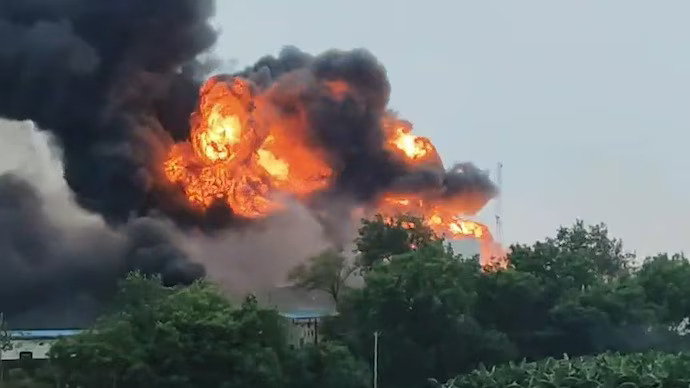
A tragic incident involving an LPG tanker caught fire and exploded at Sihori Toll Plaza near Kaushambi, Uttar Pradesh, reminding us about the devastation caused by hazardous material incidents, and how crucial it is to have emergency preparedness.
On June 26, 2026, the LPG tankers traveling on the National Highway lost control near the toll plaza in the Kokhraj Police Station Area. After striking a road divider, they over-turned and started leaking liquefied petroleum gas (LPG). Just seconds later, this leaked gas was ignited causing a huge fire engulfing the entire tanker as well as the surroundings toll plaza.
CCTV Footage Reveals the Scale of the Incident
After the incident, CCTV footage was released which showed how fast things escalated as soon as the speeding vehicle hit the divider. A huge fire erupted followed by dense smoke that forced those around to flee from the place for their own safety.
Unfortunately, this incident had claimed the life of the tankers’ driver along with some employees at the toll plaza. Two others are also getting treatment due to severe burns. As such, investigations are being carried out technically to find out why it happened.
Lessons from the Kaushambi Incident
While the formal investigation continues, this incident reinforces how important it is for organizations with hazardous material (hazmat) emergencies to have plans in place beyond just meeting basic compliance requirements.
For example, facilities near highways, logistics corridors, fuel stations, industrial clusters, warehouses and transportation hubs are at risk of suffering from an outside cause, including fire/explosion events. Organizations need to assess these potential exposure points on a regular basis.
- Fire detection and suppression systems
- Emergency response and evacuation procedures
- Coordination with local emergency services
- Incident command and communication protocols
- Personnel awareness and emergency training
- Risk assessments for facilities exposed to hazardous material transportation
Preparedness enables organisations to effectively respond during those crucial initial minutes of an emergency, minimising its potential impacts upon people, property and business continuity.
How NIST Global Supports Emergency Preparedness
At NIST Global, our belief goes beyond meeting compliance with regulations by addressing the wider need for building resilience through identification of potential hazards, evaluation of current safety measures, and ensuring preparedness for effective response during emergencies.
Our services include:
- Fire & Life Safety Audits
- Fire Risk Assessments
- Emergency Response Planning
- Emergency Evacuation Planning and Mock Drills
- Fire Safety Training
- HAZMAT Awareness and Emergency Response Training
- Process Safety Management (PSM) Consulting
- Business Continuity and Crisis Management Solutions
Through enhancement of fire protection systems, emergency procedures, and workforce preparedness, organisations’ capacity for managing fire and hazardous materials emergencies can be improved significantly.
Moving from Reaction to Prevention
The recent incidents like the Kaushambi LPG Tanker Explosion serves as a reminder about how fast an incident related to the transportation of dangerous goods could escalate to become a life-threatening situation. Although investigations would find out the exact causes for the same but what remains is an important fact – How much one should prepare beforehand.
Organizations that proactively assess risks, strengthen fire and life safety measures, and invest in emergency preparedness are better equipped to protect lives, critical infrastructure, and business operations when unexpected events occur.
Sources: The Times of India, NDTV, and The New Indian Express.