
Introduction: Key Facts
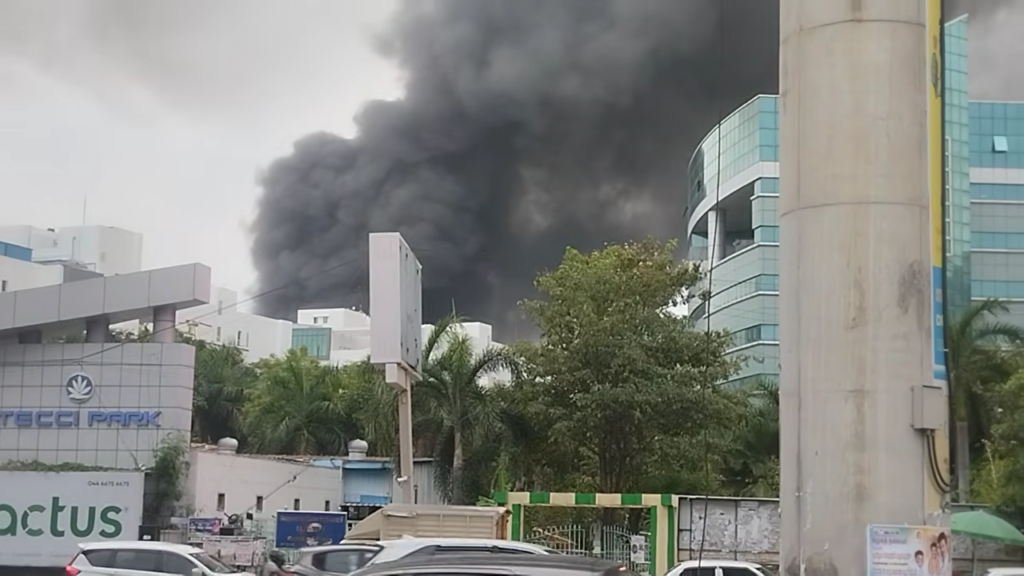
A fire incident reported near the OMR Sholinganallur–Karapakkam IT corridor in Chennai on 15th May 2026 has once again highlighted the importance of emergency preparedness in rapidly developing commercial and IT zones. The accident caused a lot of attention because it was near one of the busiest corridors of the workplace in Chennai, where thousands of professionals’ commute and work every day.
Authorities came to restrain the situation, but this incident has highlighted the importance of being aware of unforeseen emergencies in built-up, industrial areas.
Source: OneIndia
Incident Overview
The incident is said to have happened at the busy OMR IT corridor, which is the hub for all IT parks, commercial establishments, residential complexes, and the movement of people on a daily basis.
Events like these create concern not only because of the immediate fire hazard, but also due to the challenges associated with:
- High population density
- Emergency response with traffic congestion
- The evacuation management in commercial areas
- Employees and commuters in panic
- Risk of fire spread in densely occupied areas
In bustling urban corridors, even a localised fire can cause disruption in minutes, in the fields of operations, transportation, business continuity, and public safety.
Why Such Incidents Matter
Fires in the workplace and in commercial areas can be a reminder that fire safety is not a one-time compliance issue.
In many workplaces, there can be a physical fire protection system in place, but the readiness for emergency situations relies on the knowledge of the people who will have to respond appropriately during these events.
The following are important issues affecting emergency outcomes:
- Employee awareness and preparedness
- Speed of evacuation
- Availability of trained emergency response teams
- Functional fire detection and suppression systems
- Regular emergency drills and response coordination
- Clear communication during emergencies
The key distinction between controlled evacuation and chaos may lie in preparing for the incident.
Key Fire Safety Concerns in Urban Workplace Corridors
There are specific fire and emergency management issues which are unique to large IT and commercial corridors, these include:
- High occupancy buildings
- Electrical load-related risks
- HVAC and server infrastructure hazards
- Basement parking fire risks
- Evacuation complexity in multi-storey buildings
- Crowd movement during emergencies
- Coordination with external emergency services
As infrastructure grows rapidly, organizations must continuously evaluate whether their emergency preparedness systems are evolving at the same pace.
Expert Insight: Preparedness Saves Lives
Safety professionals always remind us that safety education and training for emergency preparedness is not solely about safety equipment, but rather it is about establishing a proactive safety culture throughout the organization.
Effective preparedness includes:
- Fire risk assessments
- Emergency response planning
- Evacuation readiness
- Mock drills and simulations
- Fire warden training
- Employee awareness programs
- Coordination with emergency responders
In times of true emergencies, the first few minutes are often critical. Trained and prepared staff have a greater chance of calming down, getting out safely, and preventing escalation.
Prevention and Preparedness Measures
For organisations in IT parks, commercial and industrial complexes, and large workplaces, the priorities should be:
- Routine fire safety inspections and audits
- Preventive maintenance of electrical systems
- Fire alarm and suppression system testing
- Emergency evacuation drills
- Firefighting and emergency response training
- Awareness programs for employees and facility teams
- Business continuity and emergency planning
It is essential that preparedness is not just a response to incidents after they have happened, but should be integrated into the workplace culture.
Conclusion
The OMR Sholinganallur – Karapakkam fire incident is not just a news report, it is a warning of the rapidity with which accidents can happen in the surrounding environment of human beings in which they function, travel, and spend most of their time.
In an era of urban growth and evolving workplace systems, organizations and individuals need to understand the need to be proactive about safety awareness and ongoing emergency preparedness.
Emergency does not call with warning, preparedness is the way to keep lives, assets, and operations safe.
In addition to supporting industries and workplaces, organizations like NIST Global provide Fire Fighting & Emergency Response Programs, workplace safety training, audits, and emergency preparedness programs designed to enhance organizational safety culture and enhance organizational resilience.