
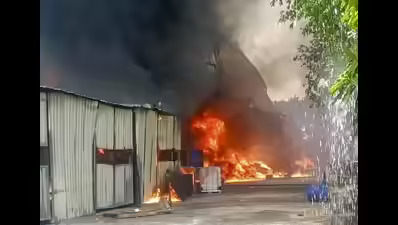
The incident of a Major Fire Accident at a chemical ink manufacturing factory in Bawal industrial area of Rewari, Haryana on 19th May 2026 is again highlighting the risk of industrial activities involving hazardous and combustible materials. The incident reportedly resulted in several explosions and injuries to workers, and required firefighting efforts with over 35 fire tenders to control the situation.
The fire reportedly got out of hand because of the presence of very combustible chemical materials in the establishment. The incident has resulted in concerns regarding hazard identification in workplaces, chemical storage procedures, operational safety controls and the effectiveness of controls already in place for managing the risk.
(Source: The Times of India)
The Need for Proactive Risk Management in Industrial Facilities
The need for proactive risk management in industrial facilities. Proactive risk management is needed in industrial facilities.
Chemical, solvent, ink and flammable liquid and other potentially dangerous materials are used in the industrial facilities, and risks need to be continually identified, assessed and controlled. If this safety shortfall goes unnoticed it can be a major incident with a major impact.
Most industrial accidents have multiple causes – from improper identification of hazards to unsafe storage to lack of inspection to poor housekeeping to equipment-related problems, to a lack of a safety management system.
Such incidents can have a wide range of consequences, including but not limited to:
- Serious injuries and fatalities
- Damage to buildings, equipment, and infrastructure
- Production interruptions and business losses
- Environmental impact due to the release of hazardous substances
- Regulatory scrutiny and compliance challenges
- Long-term financial and reputational consequences
The Bawal incident is a cautionary reminder for organizations to take steps to prevent incidents by preemptively addressing risks and hazards at the workplace.
Key Safety Measures Industries Must Prioritize
Regular Industrial Safety Audits
Industrial safety audits are used to determine the safety needs of workplace conditions, identify safety deficiencies and the quality of safety control measures. Frequent audits give good feedback to support continuous improvement and minimise risks in operations.
Hazard Identification and Risk Assessment
Recognizing hazards and their potential effects is an essential part of workplace safety. Periodic risk assessments allow companies to identify risks that are on the horizon and take measures to minimize or correct the risks before they happen.
Safe Storage and Handling of Hazardous Materials
Hazardous and combustible materials must be stored, labelled, handled and monitored to meet safety requirements. Frequent checks of storage areas can help to detect unsafe conditions and prevent potential incidents.
Compliance Reviews and Safety Inspections
Hazardous and combustible materials must be stored, labelled, handled and monitored to meet safety requirements. Frequent checks of storage areas can help to detect unsafe conditions and prevent potential incidents.
Safety Management System Evaluation
Organisation needs to review safety management system periodically to ensure that the safety policies, procedures, inspections, reporting and corrective actions are effective and relevant to operational requirements.
Workforce Safety Awareness
Employees are an integral part of workplace safety. Frequent awareness programs and safety training can educate workers to identify hazards, then to work safely and appropriately in the event of an unsafe situation.
Building Safer Workplaces Through Proactive Auditing
Major industrial incidents can reveal safety failures which could not have been identified during routine industrial activity. Safety audits, inspections and risk assessments are a great way for organisations to discover these gaps early on and implement the appropriate changes before they become a serious incident.
Creating a safety culture takes ongoing effort at all levels—ongoing monitoring, ongoing evaluations, and ongoing improvements. Identifying risk and bolstering safety measures now can keep industries safer, more protected, more productive, and more reputable in the eyes of the public.
At NIST Global, we support organizations through Industrial Safety Audits, Workplace Risk Assessments, Hazard Identification Studies, Compliance Reviews, and Safety Training programs that help strengthen workplace safety performance and reduce operational risks.
Safety is most effective when hazards are identified and addressed before an incident occurs.
For enquiries, visit: NIST Global