
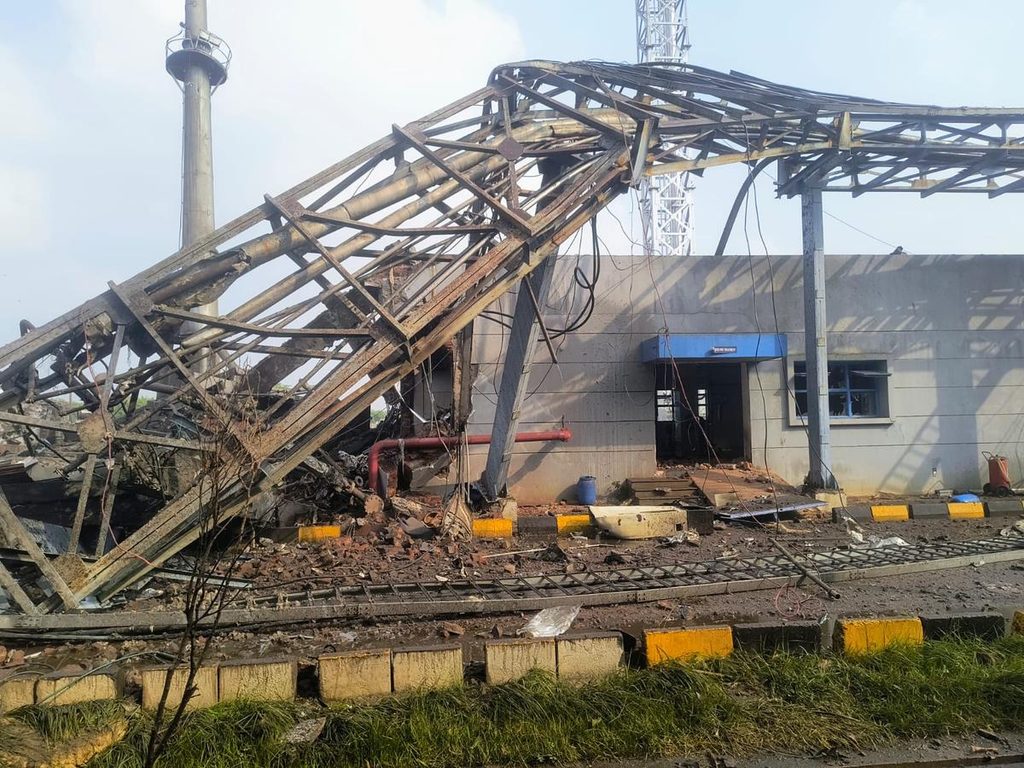
A boiler explosion at a pharmaceutical facility in Sri City, Andhra Pradesh, has brought renewed attention to the importance of process safety, equipment integrity and emergency preparedness in high-risk industrial environments.
The incident, reported on 3 October 2026, occurred at a pharmaceutical manufacturing facility in Sri City, Tirupati district. Reports initially indicated four fatalities, with the toll later rising to five workers, while around 10 others were injured.
Sources: The New Indian Express; Deccan Chronicle; NDTV.
The incident does have significant implications for safety of organisations that have boilers, pressure systems and other critical process equipment.
Why Process Safety Matters
In industries where hazardous processes, high-temperature, pressure systems or critical equipment are involved, safety cannot only be ensured by the behavior of the individual.
Process safety is concerned with the identification and control of hazards related to the design, operation, maintenance and management of industrial processes.
Failure in one component of the system can have a serious impact. It is therefore crucial that organisations regularly review the performance of their processes, equipment and safety controls to ensure they are working as they should.
Some key areas include:
- Hazard identification and risk assessment
- Safe operating procedures
- Boiler and pressure-system safety
- Preventive and predictive maintenance
- Inspection and testing of critical equipment
- Safety instrumented and protective systems
- Competency of operators and supervisors
- Management of change
- Permit-to-work systems
- Emergency preparedness and response
Equipment Safety Is a Continuous Responsibility
In pressure systems, such as boilers, it is important to systematically control throughout their operation.
Regularly scheduled inspection is not sufficient. Organisations should know the risks associated with equipment and set suitable operating limits, implement proper maintenance and ensure safety equipment and safety protection systems are effective.
This should be coordinated with operation, maintenance and engineering teams as well as the HSE team.
The knowledge and skill of the staff is also a key factor. Operators and maintainers of critical equipment must be familiar with procedures to be followed, but also with why critical controls are required.
The Role of Hazard Identification and Risk Assessment
Incidents in complex industrial environments can have multiple contributing factors.
Hazard Identification and Risk Assessment (HIRA) helps organisations systematically identify hazards, evaluate risks and establish appropriate controls before work begins.
For process industries, more structured techniques such as HAZOP (Hazard and Operability Study) can also be used to examine process deviations and identify potential causes and consequences.
These approaches help organisations move from a reactive safety culture towards a more proactive one.
Independent Safety Assessments Can Identify Gaps
Following the Sri City incident, authorities reportedly directed third-party safety audits of industries in the area.
Independent assessments can provide organisations with an additional perspective on their existing safety arrangements.
A third-party audit or safety health check can help identify gaps that may not always be visible during routine internal reviews.
The objective should not simply be to identify non-compliance. A meaningful assessment should help organisations understand:
- Where critical risks exist
- Whether existing controls are adequate
- Whether procedures are actually implemented
- Whether employees understand their responsibilities
- Whether emergency arrangements are practical and effective
- What corrective actions should be prioritised
Emergency Preparedness Matters
Even with strong preventive controls, organisations must be prepared for the possibility of an emergency.
Emergency response plans need to be practical, understood by employees and tested through appropriate drills and exercises.
Workers should know how to raise an alarm, evacuate safely, respond to an emergency and communicate with designated response teams.
For high-risk facilities, emergency preparedness should be treated as an ongoing capability rather than a document maintained only for compliance purposes.
What Organisations Can Learn
The Sri City incident is a reminder that industrial safety requires a system-wide approach.
Rather than looking at safety only after an accident occurs, organisations can strengthen prevention by regularly reviewing their critical processes, equipment, people and emergency arrangements.
Three questions are particularly important:
1. Are our critical hazards clearly identified?
2. Are the controls we have established actually effective in practice?
3. Are we independently checking whether gaps exist?
Proactive safety management is ultimately about identifying weaknesses before they become incidents.
Building Stronger Process Safety Competence
Developing the right level of competence across engineering, operations, maintenance and HSE teams is an important part of process safety.
NIST Global offers professional training programmes covering areas such as Process Safety Management, HAZOP, HIRA and Emergency Response, helping organisations strengthen hazard identification, risk assessment, process safety awareness and emergency preparedness.
For organisations operating boilers, pressure systems and other high-risk processes, strengthening safety competence and periodically reviewing existing controls can help build a more resilient safety management system.
The objective is not simply to respond better after an incident. It is to identify and control risks before they become one.