
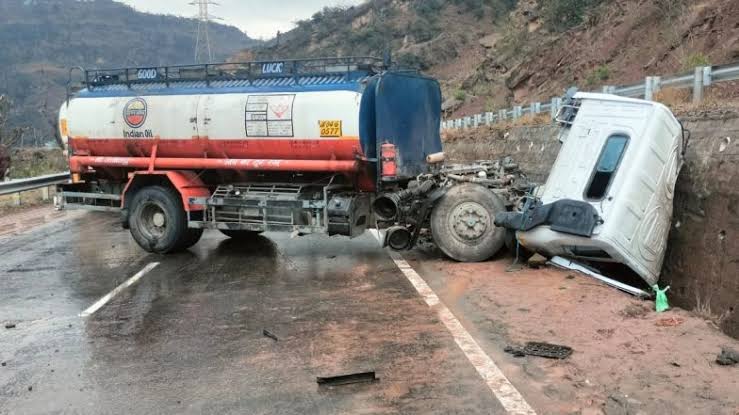
A road crash, which involves heavy vehicles, can become a full-scale emergency in just a matter of seconds. An occurrence that happened recently in Udhampur, Jammu & Kashmir, illustrates the significance of defensive driving and proper preparation in terms of road safety.
On August 28, 2026, there was an outbreak of fire resulting from the head-on collision of two tankers in the vicinity of the Malhar Palace in Udhampur on the Jammu-Srinagar National Highway. The Fire & Emergency Services have been called upon to help stop the spread of the fire. Traffic has been stopped on one side of the highway for precautionary reasons.
Why Road Safety Preparedness Matters
The use of heavy vehicles and tankers is unique in terms of road safety due to their size, weight, and stopping needs. An accident will create further dangers for drivers, passengers, rescuers, and other road users.
Organizations that use commercial vehicles or have large fleets cannot consider road safety as being in line with the traffic laws alone. Drivers need to be ready to identify hazards, assess the changes in road conditions, and make decisions in advance in case of emergencies.
Key areas include:
- Keeping a safe following distance
- Controlling speed based on road and traffic conditions
- Identifying hazards early
- Understanding the blind spots of vehicles
- Overtaking safely
- Controlling the vehicle in emergencies
- Avoiding distractions while driving
- How to act in case of a road emergency
Defensive Driving Can Help Prevent Road Risks
Defensive driving involves foreseeing possible dangers instead of waiting for the dangers to come first before taking action.
In terms of heavy-vehicle drivers, defensive driving will involve knowing how vehicle size, distance needed to brake, weather and traffic conditions, and visibility affect their decisions when driving.
Training in defensive driving could be beneficial in developing safer practices among drivers through improving their skills in:
- Foreseeing the behavior of other road users
- Keeping the right speed and distance
- Identifying collision hazards
- Making safe lane changes and overtaking
- Managing their blind spots
- Handling unpredictable road conditions
- Avoiding preventable behaviors
Driver Training Must Go Beyond Traffic Rules
Knowing the rules of the road is critical, but safe driving also requires the ability to efficiently use this information while driving.
Thus, driver training should focus on awareness, judgment, hazard perception, and decision making, rather than only reminding the drivers of the traffic laws.
Such behavior can be encouraged by organizations through training, refresher courses, driver assessments, and constant safety campaigns.
Building a Stronger Fleet Safety Culture
As for organizations that employ fleets and drivers, road safety should be considered as a continual process.
It can involve regular assessment of the driver’s practices as well as structured training to ensure safe behavior of all employees.
Proactive safety practices for the fleet can be represented by:
- Defensive driving courses
- Driver assessment
- Safety briefings
- Vehicle inspections and maintenance
- Journey risk assessments
- Incident learning and prevention
- Emergency preparedness
- Ongoing monitoring and improvement
Not only responding effectively to accidents when they occur, but also reducing their occurrence in general is important.
From Road Incidents to Preventive Action
Every road incident provides an opportunity to examine how similar risks can be reduced in the future.
The Udhampur tanker collision is a reminder that road safety requires more than vehicles that are mechanically fit and drivers who know the rules. People must also be equipped to recognize hazards and make safe decisions in real-world driving conditions.
The key question for organisations is not simply: “Can our drivers respond to an emergency?”
It is: “Have we prepared them well enough to prevent avoidable road risks?”
Strengthen Defensive Driving with NIST Global
NIST Global offers Defensive Driving and Road Safety Training services in order for organizations to improve their driving habits and their entire fleet safety culture.
With proper training, organizations can arm their drivers with information and skills on how to recognize road hazards, comprehend the risks on the roads, make good driving choices, and how to react to unexpected circumstances.
Regardless of whether the organization deals with commercial vehicles, heavy vehicles, or has many drivers, proper training is an investment in the future when it comes to road safety.
Road safety starts with safe driving decisions, and safe driving decisions start with proper training.
Make Road Safety a Priority
Road accidents occur in moments, but the process of getting prepared occurs far before the car even reaches the road.
This is achieved by raising awareness among drivers and improving their defensive driving techniques.
Work with NIST Global to create a more aware, safer and better-prepared team of drivers.