
Six Children Injured. One Incident. A Bigger Safety Lesson.
The classroom is supposed to be one of the safest environments for a child.
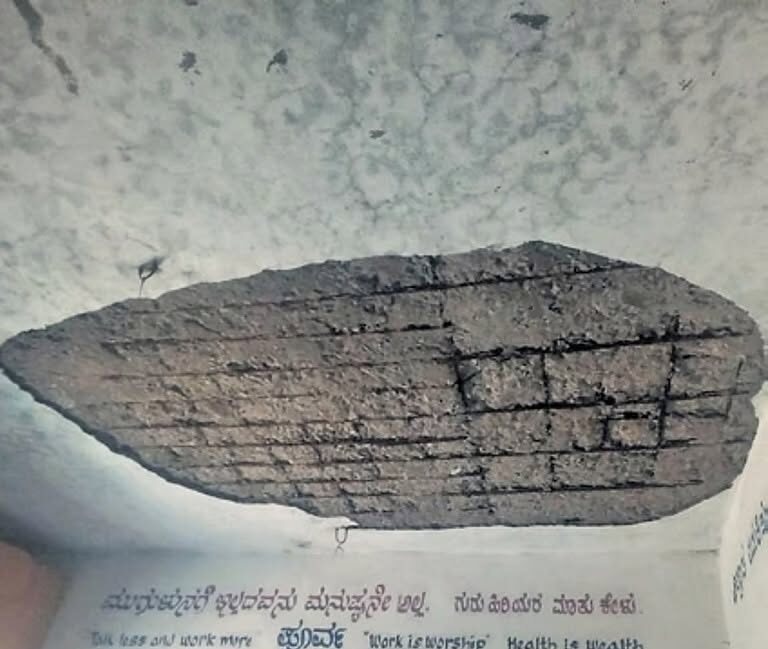
However, in September 2026 on 3 September, part of the plaster ceiling in a government school at Mugaloli Thanda, Bagalkot, Karnataka, fell in the midst of ongoing classes and ended up hurting children in the classroom. In the wake of the incident, children had to be taken to the district hospital for treatment. According to the reports that followed, the children received treatment and were later discharged.
Although the incident was brief, it poses an even greater question:
Was the danger spotted and dealt with before the ceiling fell?
This example illustrates the importance of not relying on reacting to an event in terms of safety. Regular inspections, risk assessments, and necessary maintenance are vital in order to avoid predictable dangers.
The Incident
On 3 September 2026, ceiling plaster reportedly collapsed during classes at a government school in Mugaloli Thanda, Bagalkot.
The collapse injured six children. They were taken to Bagalkot District Hospital for treatment. According to subsequent reporting, eight children admitted to the district hospital were treated and discharged safely.
The incident immediately raised concerns about the condition of the school infrastructure and whether appropriate safety checks and maintenance measures had been carried out.
Following the incident, students from Classes 4 to 6 were shifted to a nearby KPS school as an immediate safety measure. Authorities also initiated action concerning the school administration and engineering personnel.
The Karnataka Lokayukta subsequently directed a safety audit of schools in the district, including checks on building conditions, safety norms and infrastructure.
The Safety Concern
The actual collapse of the ceiling was the triggering event.
However, in terms of safety management, a more pertinent question would be the state of affairs which led to people being in harm’s way.
The state of decay of the ceiling, the visible cracks, deteriorating plaster, or any other signs of deterioration can be warning signs. If those signs are found during inspections, then they must be analyzed, reported, ranked, and fixed to make sure that the area in question is safe for further occupation.
Also, here comes the essence of reactive and proactive safety management techniques.
Investigation of an incident should not be limited to:
“Why did the ceiling collapse?”
Additional questions should be raised, such as:
- Was the building inspected regularly?
- Did any warnings signs of deterioration get discovered?
- Have there been any reports on building deterioration before?
- Has the building been properly assessed for risks?
- Who was supposed to do the necessary repairs?
- Have the issues been sorted out within reasonable time frame?
- Was the area considered safe for occupancy?
Those questions will assist the company in moving forward from finding the cause of the accident to understanding the systematic problems behind it.
What Could Have Prevented the Incident?
No investigation should make a conclusive root cause determination without evidence. But this case is one of many incidents that highlights certain preventative measures that would reduce chances of such accidents occurring again.
1. Inspections of Buildings
Inspection can reveal deterioration, damaged surfaces, cracks, water damage, and any other problems that require action.
2. Identification and Risk Assessment of Hazards
Potential hazards should be identified and evaluated for their probability of occurrence and seriousness of consequences.
3. Prompt Control of Dangerous Areas
If a dangerous structure problem is detected, priority should be given to restricting access or removing people from this area until the situation is analyzed and resolved.
4. Follow-Up of Corrective Actions
Identifying the hazard is one thing; organizations need to have clear responsibility and deadlines for solving the problem after identification.
5. Professional Assessment of Structural Conditions
In the case when building problems are detected, proper assessment of the structure and necessary correction actions need to be identified by professional personnel.
6. Independent Safety Audits
Periodic safety audits can act as additional guarantee and reveal any weaknesses that regular inspections may miss.
Where NIST Global Can Make a Difference
NIST Global believes that good safety management begins prior to any incident.
Our method of conducting safety training and audits involves assisting companies to identify hazards, comprehend risk, and implement control measures.
In regard to this scenario, a preventive safety system would entail the following elements:
HSE Audits
Systematic evaluation of the workplace in terms of safety practices and conditions.
Hazard Identification & Risk Assessment
Assisting individuals to identify the hazards that may exist, assess risk, and determine controls.
Safety Inspection Training
Ensuring that competent personnel have the ability to carry out inspections of the premises and determine unsafe conditions.
Incident Investigation Training
Training individuals to identify the immediate, underlying, and root causes of the incident and then come up with corrective and preventive measures.
Safety Awareness Training
Instilling a sense of safety among employees, supervisors, and management so that unsafe conditions are reported.
The aim here is not just to have a good response after an incident. The idea is to develop systems that reduce the likelihood of incidents taking place.
The Key Safety Lesson
The Bagalkot incident is a reminder that safety risks do not always announce themselves with an accident.
Sometimes, the warning signs are already there.
A damaged structure.
A recurring maintenance issue.
A reported hazard.
A missed inspection.
A corrective action that was never closed.
Prevention happens when those warning signs are recognized and acted upon.
Safety is not just about what we do after something goes wrong.
It is about what we do before it does.
Build a More Proactive Safety Culture
Every workplace, institution, and facility has hazards.
The real question is whether those hazards are being identified, assessed, and controlled before someone gets hurt.
NIST Global helps organizations strengthen their safety competency through practical, application-driven training and safety services tailored to real operational risks.
Identify the hazard. Assess the risk. Take action. Prevent the incident.
Talk to NIST Global about building a safer, more proactive safety culture.